 Stupid Potato
 Join Potato Plus
Personal notice: danger's my stock in trade
Let George Do It Radio Show: Free Episodes, 1946-1954
Subscribe to the podcast
No sign-up · one tap. It plays right here, around the clock.
Sleep
Let George Do It is an old-time radio detective and crime series that aired on Mutual-Don Lee from 1946 to 1954, starring Bob Bailey, Virginia Gregg and Frances Robinson. Free to hear, with no modern ads.
Free Let George Do It radio episodes: the 24/7 Let George Do It station plays its 247 episodes around the clock, and 10 play on demand on this page now.
Stupid Potato streams 65 free live radio channels, 24 hours a day, and has 28,000+ complete episodes in its library. No sign-up, no app.
Standalone channel One series, every episode shuffled, a new order every pass. Part of Gumshoe, where all the series play mixed.

Live · Let George Do ItTap play to listen
Sleep
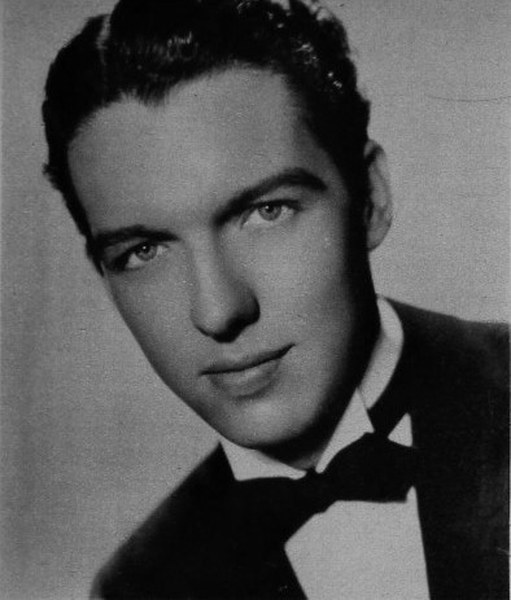
Behind the show
Let George Do It
Did you know?Let George Do It ran on the West Coast's Mutual-Don Lee network from October 18, 1946, to September 27, 1954, first on Friday nights and later on Mondays.
SourceMore about Let George Do It
- Newspaper spot ads found by the Digital Deli put the premiere a month earlier than most logs do: September 20, 1946, over KFRC in San Francisco. source
- Owen and Pauline Vinson produced the series, and at first they directed it as well. source
- Bob Bailey starred as George Valentine for almost the whole run. Olan Soule took over the voice of George in 1954. source
- George Valentine is an ex-G.I. who sets out to make money doing the jobs other people can't do for themselves, or don't have the nerve to. source
- Every client found George through a personal ad in the paper: "Danger's my stock in trade. If the job's too tough for you to handle, you've got a job for me." source
- The wording of George's ad changed from show to show, but it always opened with "Danger is my stock in trade" and closed with "Write full details!" source
Watch and listen
Coming up (times are about right)
Just played
Every episode
10 episodes, in the order they first aired. Each plays on to the next. Subscribe in any podcast app with the feed.
237 more episodes are waiting: Potato Plus (opening soon) will let members play them all on demand
Read along: Let George Do It: 280 transcripts. need a full transcript?
- 1949-11-21 · 30 minLet George Do It: Sweet Poison (1949)
Private detective George Valentine is called to the home of painter Wentworth Jonas to investigate what Gloria Bishop claims is a murder. When Valentine arrives, he discovers the "victim" is actually Jonas's cat, Harold, who appears to...
- 1946-09-20 · 30 minLet George Do It: The First Client (1946)
George Valentine, a newly independent private investigator, acquires his first client when mystery writer Jonathan Winters arrives at his office claiming he is about to be murdered. Before Valentine can learn more, Winters collapses...
- 1946-10-04 · 30 minLet George Do It: Kleptomaniac (1946)
George Valentine, a newly independent private investigator, takes on a case from Mrs. Harrington, who confesses she has a compulsive stealing problem that could ruin her husband's campaign for Alderman if discovered. George agrees to...
- 1946-10-11 · 30 minLet George Do It: The Picnic (1946)
George Valentine and his secretary Claire decide to have a picnic in the country with Claire's brother Sonny. They stop at a deserted, boarded-up house and discover a slipper with a note written in orange lipstick claiming someone is...
- 1946-10-18 · 30 minLet George Do It: Cousin Jeff and the Pigs (1946)
George's cousin Jeff arrives from the farm looking for a wife who loves his 57 pigs as much as he does. George promises to find him the perfect match and spots Kathy Phillips, a stage door girl who claims to be mad about piggies....
- 1946-10-25 · 30 minLet George Do It: The Brookdale Orphanage (1946)
George Valentine, a private investigator, is visited by movie star Jimmy Jones, who confesses he's terrified of horses after an accident and can't appear at the annual benefit for the Brookdale Orphanage where he promised to ride his...
- 1946-11-08 · 30 minLet George Do It: The Robber (1946)
Private investigator George Valentine is called to the Harding bookshop by the widow of an eccentric book dealer who died in his sleep. Mrs. Harding suspects her husband hid money in the shop and believes someone broke in to search for...
- 1946-11-15 · 30 minLet George Do It: Snookums (1946)
George Valentine agrees to care for a dog named Snookums for a couple of days while the owner, Mr. Ralston, needs it out of his house. George soon discovers that Snookums is actually a large, valuable dog stolen from society matron...
- 1946-11-15 · 30 minLet George Do It: Snookums the Lap Dog (1946)
George Valentine agrees to watch Snookums, a lap dog left by his client Mr. Ralston for a couple of days. The next morning, George discovers from the newspaper that Snookums is actually Hercules, a valuable dog stolen from socialite...
- 1946-11-29 · 30 minLet George Do It: Fifty Shares of Mazooma Limited (1946)
George Valentine agrees to buy 100 shares of Mazouma Limited stock for a mysterious anonymous client through his lawyer neighbor Spencer, who provides a $5,000 check. George sends his office boy Sonny to deliver the check to the...
- 1948-08-16 · 29 minLet George Do It: The Ghost on Bliss Terrace (1948)
George Valentine is hired by a community group led by Mrs. Angela McCauley to investigate an allegedly haunted house on Bliss Terrace. The empty Mitchell house has spooked the neighborhood with reports of mysterious faces in windows and...
Every Let George Do It episode, with its story: the full list
Let George Do It, the radio show, around the clock: Bob Bailey as George Valentine, the private eye who answers the want ads, Mutual, 1946 to 1954. A Stupid Potato channel.
About Let George Do It
Let George Do It is an old time radio detective show that ran on the West Coast's Mutual-Don Lee network from 1946 to September 27, 1954, and here you can listen to it free online, around the clock, or as a free podcast. Bob Bailey stars as George Valentine, an ex-G.I. who comes home broke from the war and puts an ad in the paper: "Danger's my stock in trade. If the job's too tough for you to handle, you've got a job for me." Every client finds him through that ad, and every ad ends "Write full details!"
The earliest shows were closer to a sitcom, with a studio audience laughing along, but the series soon became a suspenseful mystery show. George is helped, and doubted, by his secretary Claire "Brooksie" Brooks, played first by Frances Robinson and then by Virginia Gregg. Joseph Kearns, later Mr. Wilson on TV's Dennis the Menace, plays Caleb the elevator man, and Wally Maher plays Lieutenant Riley, George's loudest critic and biggest admirer. Standard Oil of California, now Chevron, sponsored the show, and its commercials often lead straight back into the story.
If you know Bob Bailey as radio's best-loved Johnny Dollar, this is the role that came first, and many of the show's people followed him to Johnny Dollar, Virginia Gregg among them. Many scripts came from the team of David Victor and Jackson Gillis; Gillis went on to write for TV's Perry Mason and Columbo. Bailey played George until 1954, when Olan Soule, later the voice of Batman on Super Friends, took over for the last season. It suits listeners who like a mystery with a little humor and a hero you would want on your side.
What you’ll hear
- Bob Bailey as George Valentine, a problem solver for hire who didn't think of himself as a detective at first.
- The banter between George and Brooksie, and the occasional "Jeepers!" from her kid brother Sonny.
- Eddie Dunstedter's music, first with a full orchestra and from 1949 on the organ alone.
- Chevron commercials woven into the stories by announcer Bud Hiestand.
- Cases that later range far from home, to Bolivia, Panama, Paris and Istanbul.
- Busy West Coast radio actors such as William Conrad, Hans Conried, John Dehner, Lurene Tuttle and Harry Bartell.
Where to start
- Start with "The First Client" (1946), the audition, in which George's very first client is murdered in his office and then the body vanishes.
- "Mayhem By Experts" (1949) has Lieutenant Riley and five mystery writers plan a birthday prank on George that turns deadly.
- For the holidays, "Follow That Train" (1949) brings George a letter signed by Santa Claus, and "Santa Claus in Glass" (1950) ends with Bob Bailey wishing listeners a merry Christmas.
- The podcast releases a new episode every day in broadcast order.
Let George Do It on the radio
Mutual-Don Lee, 1946-1954. With Bob Bailey, Virginia Gregg, Frances Robinson, Joseph Kearns, Olan Soule, Ken Christy.
- The very first version of the ad was played for laughs. It offered to solve a crime, walk a dog, or spank a wife, a joke that has not aged well. source
- The earliest episodes were closer to a sitcom than a private eye show, complete with a studio audience laughing along. The series soon turned into a suspenseful detective drama. source
- Back story: George came home broke from the war and spent the last of his mustering-out pay renting an office and furniture. source
- At the start George didn't really think of himself as a detective. He saw himself as a problem solver for hire. source
- In two auditions recorded in April 1946 the hero was called George Lincoln. By the May 14, 1946 audition he had become George Valentine. source
- Shows weren't given individual titles until August 9, 1948, according to Jerry Haendiges' log of the series. source
- Standard Oil of California, the company now known as Chevron, sponsored the show. source
- Chevron's commercials were stitched into each episode and often led straight back into the story. source
- Announcer John "Bud" Hiestand was Chevron's spokesman on the show, mixing his car-care tips with the story set-ups. source
- Eddie Dunstedter supplied the music, first with a full orchestra. As radio budgets shrank, the orchestra gave way to Dunstedter alone at the organ from January 1949. source
- Dunstedter did double duty as Chevron's musical director and composer for the show. source
- One 1951 commercial tried to prove that RPM motor oil reduced engine wear by using a Geiger counter. source
- A 1952 episode, "Operation Europa," includes a commercial for the Chevron National Credit Card. source
- In the final run, with Olan Soule as George, the sponsor was Pream, a powdered coffee creamer. source
- George's secretary was Claire Brooks, called "Brooksie." Frances Robinson played her first, then Virginia Gregg, then Lillian Buyeff. source
- Frances Robinson handed the role of Brooksie to Virginia Gregg in December 1949. source
- When Olan Soule took over as George in 1954, Virginia Gregg stayed on as Brooksie. source
- Brooksie's kid brother Sonny (Eddie Firestone) was George's first helper. He was fond of saying "Jeepers!" and was soon cut back to an occasional visitor. source
- It was Sonny who volunteered his sister Claire as George's assistant. Claire was far less sure about George's prospects than her brother was. source
- Joseph Kearns played Caleb, the elevator man in George's building, an old family friend who seems to have found George his office. source
- Wally Maher played Police Lieutenant Riley, George's loudest critic and his biggest admirer. source
- Wally Maher died during the 1951 Christmas season at 43. Ken Christy came in as George's new police foil, Lieutenant Johnson. source
- By the time Maher and Robinson were gone, the writers had shifted the show further from comedy toward hard mystery, to compete with Dragnet and the other crime shows. source
- Bud Hiestand's announcements were so much a part of the show that the Digital Deli counts him among the supporting cast. source
- The May 14, 1946 audition cast included Bob Bailey, Shirley Mitchell, Eddie Firestone, Joseph Kearns and Howard McNear, with Bud Hiestand announcing. source
- Just about every busy West Coast radio actor turned up on the show sooner or later, including William Conrad, Hans Conried, John Dehner, Lurene Tuttle and Harry Bartell. source
- Polly Hopkins wrote the earliest scripts and did much to shape the character of Claire Brooks. source
- Don Clark directed scripts by the writing team of David Victor and Jackson Gillis. source
- Jackson Gillis went on to a long TV career, writing for Adventures of Superman, Perry Mason, Lassie and Columbo. source
- The Vinsons eventually handed direction to Don Clark, and Kenneth Webb directed in the final years. source
- In the audition, "The First Client," George's very first client is murdered in George's office. Then the body vanishes, and so does the man's wife. source
- One of the earliest surviving episodes, from October 18, 1946, has George hunting for a girlfriend for his cousin Jeff. She has to like pigs. source
- In "The Brookdale Orphanage" (October 25, 1946), George has to help a cowboy movie star who is afraid of horses. source
- On September 26, 1947, Sam Spade himself dropped in on George and Brooksie in an episode called "Sam Spade Visits George." source
- In "Mayhem by Experts" (January 31, 1949), Lieutenant Riley and five mystery writers plan a birthday prank on George with a fake corpse. Then the joke turns deadly. source
- In "The Flowers That Smelled of Murder" (1948), George's assistant, Miss Brooks, meets a bashful biology teacher. Radio historian J. David Goldin suspects a wink at Our Miss Brooks, which had premiered a few months earlier. source
- In the Christmas episode "Follow That Train" (1949), George gets a letter asking for help, signed by Santa Claus. source
- "Go Jump in the Lake" aired on February 13, 1950, and the script makes several references to Valentine's Day. source
- In "Santa Claus in Glass," broadcast on Christmas Day 1950, Bob Bailey stepped out of character to wish listeners a merry Christmas. source
- In "Off the Record" (1951), a radio commentator is shot dead on the air, and one suspect is an announcer whose hobby is recording radio shows. source
- George's wartime past comes up in "Come to the Casbah" (1952): in Algeria, an old pal from the O.S.S. makes George wonder whether he's working for the wrong side. source
- Later shows sent George and Brooksie farther from home, including Bolivia, Panama, Paris and Istanbul. source
- In "The Scream of the Eagle" (1950), actor Bill James is credited for playing the eagle. source
- The phrase "Let George do it" is said to go back to 15th-century France, as a joke about Georges d'Amboise, the busy chief minister of King Louis XII. source
- A Canadian run on CJOB in Winnipeg (1952-1953) used episodes reworked by Harry S. Goodman Syndications, with the Chevron commercials and announcer cut out. source
- RadioArchives.org found 40 of those Canadian episodes, bringing back stories that had been missing for decades. source
- Armed Forces Radio also rebroadcast the series, keeping Hiestand's story narration but cutting out the Chevron sales pitches. source
- The Digital Deli estimates about 420 broadcasts, of which around 196 are in circulation today. source
- Let George Do It nearly made it to television. Two scripts were filmed, but the producers decided the slightly built Bob Bailey didn't look like a TV tough guy. source
- Many of the show's people, including Bob Bailey, Virginia Gregg and Eddie Dunstedter, went on to Yours Truly, Johnny Dollar. source
- Bob Bailey was born in Toledo, Ohio, to stock-company actors. He made his first stage appearance with his mother when he was ten days old. source
- Bailey's middle name, Bainter, came from his godmother, the actress Fay Bainter. source
- Before Let George Do It, Bailey had a one-year contract with 20th Century-Fox. His first two films starred Laurel and Hardy. source
- When Fox didn't renew his contract, Bob Bailey went back to radio and landed George Valentine in 1946. source
- Bob Bailey is best remembered as Johnny Dollar, the insurance investigator he played from 1955 to 1960. source
- Before her radio career took off, Virginia Gregg played double bass with the Pasadena Symphony. source
- Virginia Gregg is one of the uncredited voices of Mrs. Bates in Hitchcock's Psycho (1960). source
- Frances Robinson was a child actress: at five she played Little Henrietta in the 1921 silent film Orphans of the Storm. source
- Frances Robinson worked as a model for the John Robert Powers agency before she acted in films as an adult. source
- By the Digital Deli's count, Frances Robinson gave more than 1,000 radio performances in a 16-year radio career. source
- Olan Soule weighed only about 135 pounds, and listeners who met him in person were often surprised that his slight frame went with that voice. source
- To a later generation Olan Soule was the voice of Batman, starting with The Batman/Superman Hour in 1968 and continuing on Super Friends. source
- Joseph Kearns, radio's Caleb, later played grumpy neighbor Mr. Wilson on TV's Dennis the Menace. source
- Joseph Kearns was the Crazyquilt Dragon on the radio serial The Cinnamon Bear. source
- Bud Hiestand announced The Cinnamon Bear in 1937 and also voiced several of its characters. source
- Hiestand once filled in for Walt Disney himself on The Mickey Mouse Theatre of the Air after Disney was held up on the way to the studio. source
- Wally Maher, radio's Lieutenant Riley, was the original voice of Tex Avery's cartoon Screwy Squirrel. source
- Ken Christy, the later Lieutenant Johnson, was typecast in films too: one 1950 article said he had played a lawman in 98 of his 100 film roles. source
- Eddie Firestone, radio's Sonny, had played the title role in That Brewster Boy and served in the Marine Corps during World War II. source
- Shirley Mitchell, heard in the 1946 audition, was best known on radio as Southern belle Leila Ransom on The Great Gildersleeve. source
- A surviving Pream-sponsored show from September 1954 credits J. C. Lewis as director and George Wright at the organ. source
Where the recordings come from
The Let George Do It recordings here come from the Old Time Radio Researchers' Let George Do It set (280 recordings), hosted by the Internet Archive. Our thanks to the Old Time Radio Researchers, the volunteers who found, dated and assembled the set, and to the Archive and the collectors whose uploads it rests on. The sound is our remaster of those files (rumble, hiss and hum cleaned out, levelled to steady broadcast loudness); the recordings themselves are theirs. About our sources.
Every Let George Do It episode: the full list, with air dates and stories
More to listen to
- Yours Truly, Johnny Dollar
- Boston Blackie
- Broadway Is My Beat
- Nick Carter, Master Detective
- The Adventures of Philip Marlowe
- Christmas on old-time radio
- Thanksgiving on old-time radio
Let George Do It cast
Supporting and character actors heard in our episodes of Let George Do It, each with the shows and episodes they are in. The supporting cast of old-time radio: every actor
- Virginia Gregg (168 episodes)
- Wally Maher (67 episodes)
- Lawrence Dobkin (48 episodes)
- Ken Christy (39 episodes)
- Herb Butterfield (22 episodes)
- Tony Barrett (21 episodes)
- Jeanne Bates (20 episodes)
- Harry Bartell (19 episodes)
- Lee Patrick (17 episodes)
- Howard McNear (13 episodes)
- Joseph Forte (13 episodes)
- Luis Van Rooten (13 episodes)
- Ed Begley (12 episodes)
- Lurene Tuttle (12 episodes)
- Jeanette Nolan (11 episodes)
- Eddie Firestone (10 episodes)
- Jack Kruschen (10 episodes)
- Victor Rodman (10 episodes)
- Byron Kane (8 episodes)
- Irene Tedrow (8 episodes)
- Peter Leeds (8 episodes)
- Sarah Selby (7 episodes)
- Alan Reed (6 episodes)
- Betty Lou Gerson (6 episodes)
Spotted a wrong date, title or name? Report a mistake · Missing a series? Request a show · Suggest a note
Questions
Who played George Valentine in Let George Do It?
Bob Bailey played George Valentine from 1946 until 1954, when Olan Soule took over. Bailey went on to play Johnny Dollar from 1955 to 1960.
Where can I listen to Let George Do It radio episodes for free?
On the Stupid Potato Let George Do It channel, which streams the original radio episodes 24 hours a day, free and with no account. A free podcast also releases them one a day in broadcast order.
Who played Brooksie on Let George Do It?
Frances Robinson played George's secretary Claire "Brooksie" Brooks first. Virginia Gregg took over in December 1949, and Lillian Buyeff also played the part.
Who sponsored Let George Do It?
Standard Oil of California, the company now known as Chevron, sponsored the show for most of its run. In the last season, with Olan Soule as George, the sponsor was Pream coffee creamer.
Is Let George Do It free?
Yes. Let George Do It is free to listen to, live around the clock and as a podcast: no sign-up, no app and no subscription. Potato Plus is optional and never required.
Do I need an account or an app for Let George Do It?
No. It is an internet radio channel, live 24 hours a day: press Listen live, no sign-up and no app needed.
Are there ads on Let George Do It?
No modern ads, and we promise none until Valentine's Day 2027 (February 14). Nothing breaks into the show to sell you something you never asked for. Any commercials you hear are the original sponsor spots that aired with the broadcast.
Who makes Let George Do It?
Let George Do It is a Stupid Potato channel (https://stupidpotato.com/), made by Stupid Potato Studios and powered by MonsterCast. The other channels and the Stupid Potato cartoons are at https://stupidpotato.com/.