 Join Potato Plus

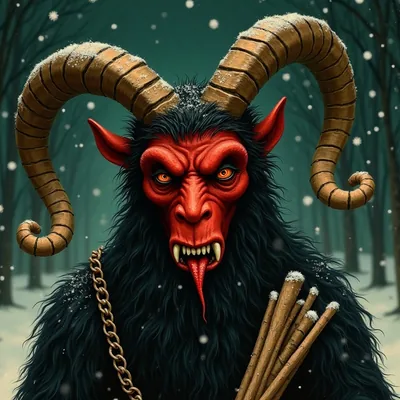
The Alps · December 5
Krampus
The horned companion of St. Nicholas, out on Krampusnacht with chains, bells and birch switches.
Real folklore · told with affection
Krampus has cousins. Every corner of Europe has its own winter visitor who checks up on the children between St. Nicholas Day and Epiphany: a giant cat in Iceland, a horse skull in Wales, a log that gives presents in Catalonia. Here they all are, real folklore with sources, told with affection: we laugh at the monsters, never at the people.
The Alps · December 5
The horned companion of St. Nicholas, out on Krampusnacht with chains, bells and birch switches.
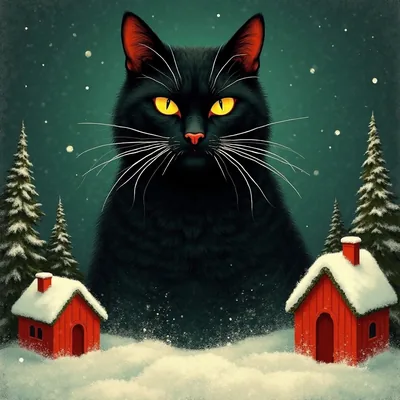
Iceland · Christmas Eve
The Yule Cat (Jólakötturinn) is a huge, hungry cat from Icelandic folklore who prowls the snowy countryside at Christmas and eats anyone who has not been given new clothes to wear by Christmas Eve.
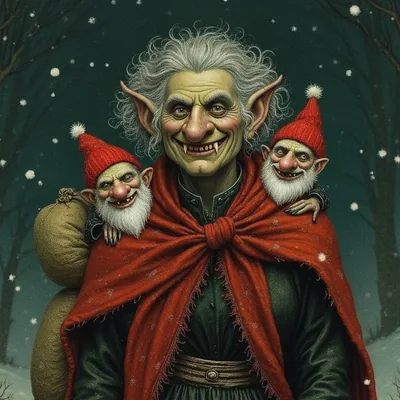
Iceland · December 12 to January 6
Grýla is the troll mother of Icelandic folklore who comes down from the mountains at Christmas looking for naughty children to put in her stew pot.
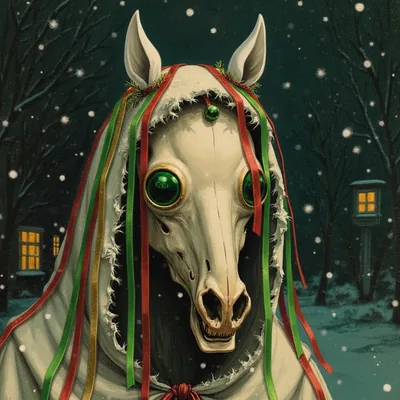
Wales · Christmas to Twelfth Night
The Mari Lwyd (usually translated Grey Mare) is a Welsh midwinter custom: a horse's skull on a pole, draped in a white sheet and decorated with ribbons, carried from door to door by wassail singers between Christmas and Twelfth Night.
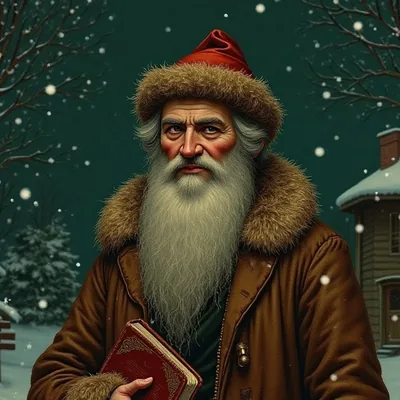
Pennsylvania Dutch · before Christmas
Belsnickel is a fur-clad, grumbling Christmas visitor from Pennsylvania Dutch tradition who turns up in the weeks before Christmas with a switch for naughty children and candy, cakes or nuts for good ones.
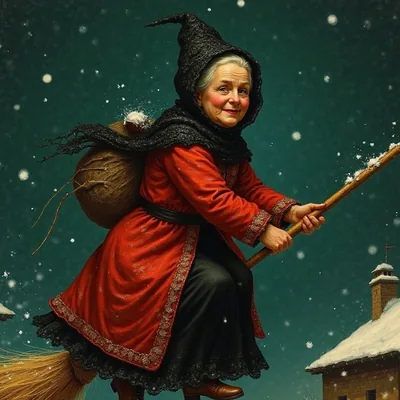
Italy · January 5
La Befana is Italy's Epiphany gift-bringer: a kindly but very ugly old woman on a broomstick who comes down the chimney on the night of January 5 and fills children's stockings with sweets, or coal for the naughty.
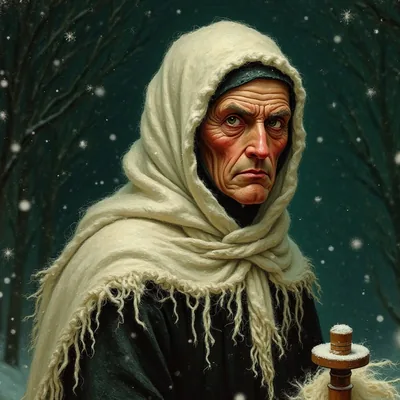
Austria & Bavaria · Twelfth Night
Frau Perchta is a figure of Alpine folklore in Bavaria, Austria and Tyrol who walks the land in the Twelve Nights around Epiphany, rewarding hard-working spinners and punishing lazy ones.
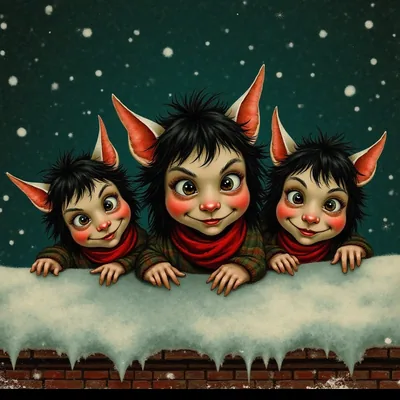
Greece · the twelve days
The Kallikantzaroi are mischievous goblins of Greek and Balkan folklore who spend the year underground sawing at the tree that holds up the world, then climb up to make trouble during the twelve days of Christmas, from December 25 to January 6.
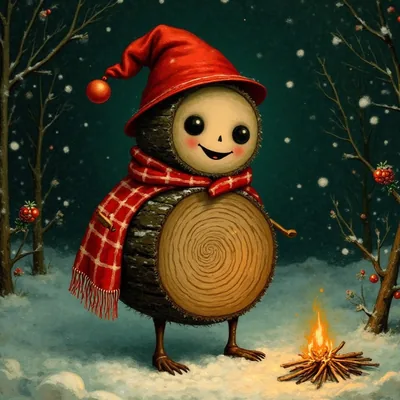
Catalonia · December 8 to Christmas
Caga Tió, or the Tió de Nadal (Christmas Log), is a Catalan Christmas custom: a log with a painted face and a red barretina cap that the family feeds and keeps warm under a blanket from December 8, then taps with sticks on Christmas Eve or Christmas Day while singing, until it poops sweets and small presents..
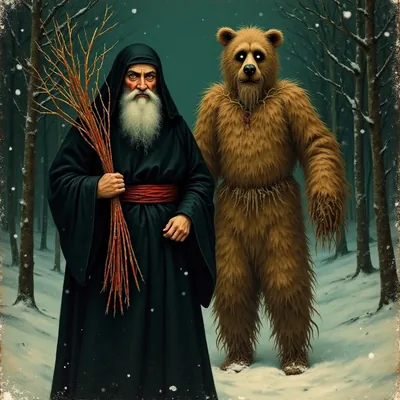
France & Alsace · December 6
Père Fouettard (Father Whipper) is St.
Each country has its own: Krampus in the Alps, the Yule Cat and Grýla's Yule Lads in Iceland, the Mari Lwyd in Wales, Belsnickel in Pennsylvania, Père Fouettard in France, the Kallikantzaroi in Greece.
Austria, Germany and Italy's South Tyrol (Krampus, Frau Perchta), Iceland, Wales, Italy (La Befana), Greece (the Kallikantzaroi), Catalonia (Caga Tió), France and Belgium (Père Fouettard, Hans Trapp) and the Pennsylvania Dutch (Belsnickel).
Yes. Krampus introduces each Kousin on the air on Krampus Kristmas, the world's first 24/7 Krampus radio station, free.
On the air now
Krampus Kristmas is the world's first 24/7 Krampus radio station: 200+ original Krampus songs, 30 Krampus Tales, classic Christmas horror from old-time radio and vintage Christmas commercials, hosted by Krampus himself. Free, no sign-up, until Christmas Eve.
New channels, the best find from the archive, and what is coming up. One email a week.