 Join Potato Plus

Krampus’s Kousins · real folklore
The Kallikantzaroi, the Greek Christmas goblins
The Kallikantzaroi are mischievous goblins of Greek and Balkan folklore who spend the year underground sawing at the tree that holds up the world, then climb up to make trouble during the twelve days of Christmas, from December 25 to January 6. The Epiphany blessing of the waters sends them back down, where the tree has healed and they must start again.
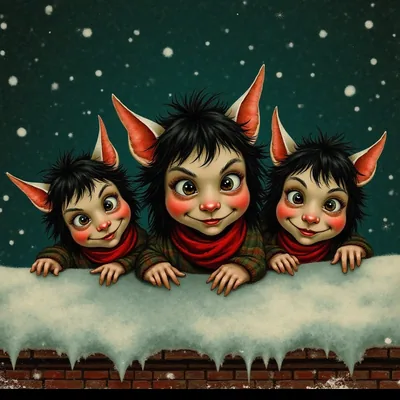
The goblins under the world
All year the Kallikantzaroi (one is a kallikantzaros) saw at the trunk of the great tree that holds up the Earth. Just as they are about to finish, Christmas comes, and they cannot resist going up for twelve days of mischief. While they are away the tree heals, so every January they go back to find the work undone. It is the most patient tragedy in folklore, and we are rooting for them a little.
What they look like and what they do
Clement Miles, in 1912, called them the most vividly believed-in of all Christmas visitors: half-animal, half-human, black and hairy, with huge heads, red eyes, goats' or donkeys' ears, tusks and long curved nails. They hide in dark, damp places by day and run wild at night, getting into unprepared houses by the chimney or the door, and flee when the third cock crows. Their last night is Epiphany, when the priest blesses the waters and sprinkles the houses; a folk rhyme has them grumbling “here comes the pot-bellied priest, with his censer in his hand”. Similar goblins turn up in Bulgarian, Serbian, Albanian, Cypriot and Turkish folklore.
How to keep them out
Keep the fire burning in the hearth all night, as some households did with a Yule log through all twelve days. Mark a cross on the door, burn something strong-smelling, or hang a peace offering of pork bones or sweets in the chimney. Best of all, leave a colander on the doorstep: a kallikantzaros has to stop and count the holes, and since it can only count “one, two”, it is still counting when the sun comes up.
Hear it on Krampus Kristmas
The song
The Kallikantzaroi
Greek bouzouki, fast rebetiko-style dance rhythm, baglama
Krampus’s Kousins, on the air
The Kallikantzaroi
Greek goblins who saw at the tree that holds up the world all year, then climb up for twelve days of Christmas mischief.
More of Krampus’s Kousins
Questions
What are Kallikantzaroi?
Mischievous goblins of Greek and Balkan folklore who live underground sawing at the tree that holds up the world and come up to cause trouble during the twelve days of Christmas.
When do the Kallikantzaroi appear?
From Christmas Day, December 25, to Epiphany, January 6. The Epiphany blessing of the waters sends them back underground.
How do you keep Kallikantzaroi away?
Keep the fire burning all night, leave a colander on the doorstep (they stop to count the holes and can't get past two), mark a cross on the door, and wait for the Epiphany blessing.
Why don't they ever cut down the World Tree?
They leave it unfinished every Christmas to come up and make mischief, and by the time they go back after Epiphany the tree has healed.
Sources
On the air now
Krampus Kristmas, free 24/7
Krampus Kristmas is the world's first 24/7 Krampus radio station: 200+ original Krampus songs, 30 Krampus Tales, classic Christmas horror from old-time radio and vintage Christmas commercials, hosted by Krampus himself. Free, no sign-up, until Christmas Eve.