 Stupid Potato
 Join Potato Plus
The cavalry post · 1956
Fort Laramie Radio Show: Free Episodes, 1956
Subscribe to the podcast
No sign-up · one tap. It plays right here, around the clock.
Sleep
Fort Laramie is an old-time radio western series that aired on CBS Radio in 1956, starring Raymond Burr, Old Bedlam and General William T. Sherman. Free to hear, with no modern ads.
Free Fort Laramie radio episodes: the 24/7 Fort Laramie station plays its 38 episodes around the clock, and 7 play on demand on this page now.
Stupid Potato streams 65 free live radio channels, 24 hours a day, and has 28,000+ complete episodes in its library. No sign-up, no app.
Standalone channel One series, every episode shuffled, a new order every pass. Part of Dry Gulch, where all the series play mixed.

Live · Fort LaramieTap play to listen
Sleep
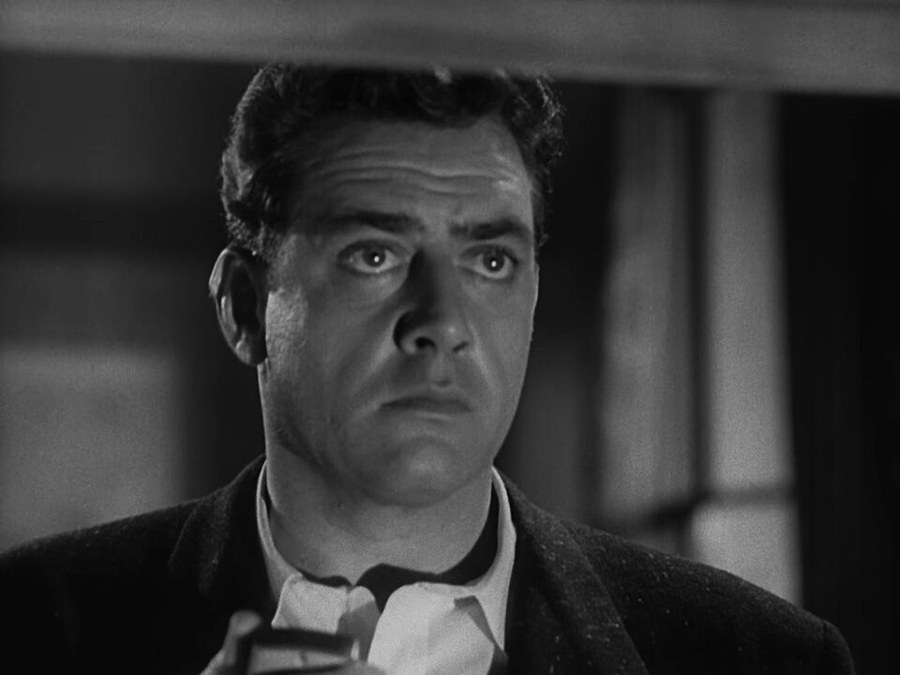
Behind the show
Fort Laramie
Did you know?Fort Laramie premiered on CBS Radio on Sunday, January 22, 1956, and ran until October 28, 1956, in a Sunday slot at 5:30 p.m. Eastern.
SourceMore about Fort Laramie
- The very first episode, "Playing Indian," has Captain Quince setting a trap for horse thieves and killers who are trying to make the cavalry blame the Arapaho. source
- Each show opened by promising "specially transcribed tales of the dark and tragic ground of the wild frontier."
- The announcer went on to call it the saga of fighting men "who rode the rim of empire," and the story of Lee Quince, Captain of Cavalry.
- Raymond Burr starred as Captain Lee Quince, a cavalry officer at the old frontier post of Fort Laramie. source
- Reviewers point out that Fort Laramie was Raymond Burr's only starring role on radio. He usually played villains. source
- When he landed the part, Burr was a 39-year-old Canadian-born actor who had made 37 films since 1946, including Rear Window. source
Watch and listen
Coming up (times are about right)
Just played
Every episode
7 episodes, in the order they first aired. Each plays on to the next. Subscribe in any podcast app with the feed.
31 more episodes are waiting: Potato Plus (opening soon) will let members play them all on demand
Read along: Fort Laramie: 38 transcripts. need a full transcript?
- 1956-04-15 · 30 minFort Laramie: Stage Coach Stop (1956)
A stagecoach carrying Mrs. Kleinexel and her daughter Opie breaks a wheel and must stop at Fort Laramie for repairs. While waiting for the wheelwright to fix it by morning, the demanding Mrs. Kleinexel makes arrangements for food...
- 1955-07-25 · 31 minFort Laramie: ep Audition (1955)
Captain Lee Quintz of Fort Laramie discovers that a homestead family has been killed by Sioux warriors, and evidence suggests the Indians are being supplied with modern Henry rifles. The Captain wants to pursue the renegade leader...
- 1956-01-22 · 30 minFort Laramie: Playing Indian (1956)
Captain Quince returns to Fort Laramie on leave, planning to resign from the army and seek his fortune in business. He arrives to find that Arapaho raiders have been striking settlements and stealing horses, killing an entire family in...
- 1956-01-29 · 30 minFort Laramie: Boatwrights Story (1956)
At Fort Laramie, Captain Quince discovers that a homestead has been attacked by Sioux Indians led by Yellowknife, who are now armed with repeating rifles. Despite orders from the Major to remain focused on reservation security, Captain...
- 1956-02-05 · 30 minFort Laramie: Squaw Man (1956)
Captain Lee Quince learns from Will Granby, a white man living among the Arapaho, that the tribe is starving because the government has failed to deliver promised food supplies to the agency. Granby warns that desperate Indians will be...
- 1956-02-12 · 30 minFort Laramie: The Woman at Horse Creek (1956)
A cavalry patrol discovers a woman at Horse Creek who has been nursing her dying husband through gangrene and a broken leg. When the soldiers offer to bury him and take her to the safety of Fort Laramie, she refuses to leave, determined...
- 1956-02-19 · 30 minFort Laramie: Boredom (1956)
Boredom and confinement at Fort Laramie are wearing on the soldiers, leading to tension and violence between enlisted men. Captain Quincy is ordered by Major Daggard to lead a buffalo hunting expedition with fifteen men, including the...
- 1956-03-04 · 30 minFort Laramie: Shavetail (1956)
Captain Quince reprimands young Lieutenant Sybert for abandoning his orders and engaging in combat with Indians, resulting in one soldier killed and others wounded. When Major Daggett threatens an official inquiry, Quince accepts...
Every Fort Laramie radio episode, 1956, around the clock: Raymond Burr as Captain Lee Quince of the cavalry, on the Wyoming frontier. A Stupid Potato channel.
About Fort Laramie
Fort Laramie is an old time radio western from CBS, broadcast from January 22 to October 28, 1956, and you can listen to it free online here, around the clock or as a podcast. Raymond Burr, just before he became TV's Perry Mason, stars as Captain Lee Quince of the U.S. Cavalry at the real frontier post of Fort Laramie in Wyoming. With him are Vic Perrin as Sergeant Gorce, Harry Bartell as Lieutenant Seiberts and Jack Moyles as Major Daggett. It was Burr's only starring role on radio.
The show comes from Norman Macdonnell, the producer-director of Gunsmoke, with Gunsmoke's writers, its sound men and many of its actors, and it has the same grown-up tone. Macdonnell told his writers that historical accuracy came first, so the stories use the real names of the fort's buildings, such as the sutler's store and Old Bedlam. He called the series "a monument to ordinary men who lived in extraordinary times," whose enemies were heat, cold, disease and boredom "and perhaps last of all, hostile Indians."
Kathleen Hite, the first woman staff writer at CBS, wrote most of the scripts, including some of the best. Like Gunsmoke, Fort Laramie gives women strong parts and treats Native Americans with sympathy, and the sound is made with care: saddles creak, rifles crack and chairs scrape before the footsteps start. Radio historian Jack French wrote that if not for Gunsmoke, it could be called the best adult western ever aired. The series ended after ten months when Perry Mason took Burr to television, and every episode survives.
What you’ll hear
- Raymond Burr as Captain Quince, a rare good-guy lead for an actor best known then for playing villains.
- Frontier history taken seriously, from galvanized Yankees and scurvy to a story closely based on the Sand Creek Massacre of 1864.
- Howard McNear, radio's Doc Adams, as Pliny the sutler, and Gunsmoke regulars such as Parley Baer, Virginia Gregg, Sam Edwards and John Dehner.
- Real figures of the Plains, including the Lakota chiefs Spotted Tail and Red Cloud.
- Careful sound effects by Gunsmoke's team of Bill James, Ray Kemper and Tom Hanley.
- Lighter stories too, such as a moral-improvement committee getting beer banned at the post.
Where to start
- Begin with "Playing Indian" (1956), the first broadcast, in which Quince traps horse thieves trying to blame the Arapaho.
- "Shavetail" (1956) introduces Lieutenant Seiberts, a green officer who loses 35 horses on his first patrol.
- "The Massacre" (1956), with John Dehner as a zealous major, and "The Woman at Horse Creek" (1956) show the series at its most serious.
- Listen live any time, or follow the podcast, which adds a new episode every week in broadcast order.
Fort Laramie on the radio
CBS Radio, 1956. With Raymond Burr, Old Bedlam, General William T. Sherman.
- The show was produced and directed by Norman Macdonnell, the same man behind radio's Gunsmoke. source
- Macdonnell created Fort Laramie in late 1955 and told his writers that historical accuracy came first. source
- Writers had to get the geography, Indian customs and military terms right, and use the real names of the fort's buildings. source
- When characters mention the sutler's store, the surgeon's quarters, Old Bedlam or the old bakery, they're naming real buildings at the original fort. source
- "Sutler's store" is period-correct: that was the name for the post's trading store before 1870. source
- The real Old Bedlam, built in 1849, was Fort Laramie's first officers' quarters and is the oldest known U.S. military building in Wyoming. source
- The regulars: Vic Perrin as Sergeant Gorce, Harry Bartell as Lieutenant Seiberts and Jack Moyles as Major Daggett, the post commander. source
- The real Fort Laramie was usually commanded by a lieutenant colonel. Radio historian Jack French guessed Macdonnell picked "Major" because it was shorter. source
- Lieutenant Seiberts didn't arrive until episode 7, "Shavetail," on March 4, 1956. He was added to round the main cast out to four. source
- "Shavetail" was the cavalry's nickname for a brand-new officer fresh out of West Point. source
- The word came from the habit of shaving or docking the tail of an untrained horse, so troopers knew to keep clear of it. source
- In "Shavetail," the green lieutenant fails to follow simple orders and loses 35 horses and one man. Quince takes him back out to get the horses back. source
- Harry Bartell was 42 in 1956, older than both Burr and Perrin, and he worried he couldn't sound like a young junior officer. source
- Every regular except Raymond Burr had already been heard on Macdonnell's Gunsmoke. source
- Fort Laramie shared Gunsmoke's producer-director, its writers, its sound effects men and many of its actors. source
- Gunsmoke had been on the air for almost four years when Macdonnell brought Fort Laramie to CBS. source
- Howard McNear, radio's Doc Adams on Gunsmoke, had a recurring part as Pliny, the fort's sutler. source
- Sam Edwards turned up in several episodes as Trooper Harrison. source
- Gunsmoke's William Conrad and Georgia Ellis never appeared on Fort Laramie, but Parley Baer (Chester) and Howard McNear (Doc) both had big roles in "Nature Boy." source
- In "Nature Boy" (July 29, 1956), McNear and Virginia Gregg play Horace and Winifred Quiring, bird-watchers who head west to teach the Indians basket and bead making. source
- Kathleen Hite wrote 27 of the episodes, John Dunkel five, John Meston four and Les Crutchfield two. source
- The other scripts came from Gil Doud, E. Jack Neuman and William Robson, one each. source
- Jerry Haendiges' log credits Kathleen Hite with every script from June 24, 1956, to the end of the run. source
- Kathleen Hite was the first woman staff writer at CBS. She got in as a secretary because the network didn't hire women writers. source
- Harry Bartell later called Kathleen Hite "a hell of a writer." Jack French credits her with some of the series' best episodes. source
- Amerigo Marino supplied the music for the series. source
- Dan Cubberly was the announcer. source
- Sound effects were by Bill James, Ray Kemper and Tom Hanley, the same team that worked on Gunsmoke. source
- Every rifle crack, every creak of a McClellan cavalry saddle and every footstep across the dirt parade ground was done with care. source
- Listen for the little things: when a character gets up from a table, the chair legs scrape the floor before the footsteps start. source
- Most West Coast radio actors were also doing film and TV work by then, so the show was rehearsed and taped in the evening. source
- Once a week the cast and crew met at CBS Studio One in Hollywood to record the show. source
- Episodes were often recorded weeks in advance. "The Payroll," for example, was recorded on August 4, 1956, and aired September 16. source
- An audition show was recorded on July 25, 1955, with John Dehner, not Raymond Burr, as Captain Quince. source
- The audition story, John Meston's "Boatwright's Story," was remade with Burr and became the second broadcast, on January 29, 1956. source
- In "Boatwright's Story," Quince leads a patrol to stop someone selling Henry rifles to Yellow Knife. source
- Fort Laramie had no sponsor for most of its run. CBS carried it as a "sustaining" program. source
- Many episodes survive in two versions: the CBS network broadcast and an Armed Forces Radio rebroadcast. source
- One copy of "Buffalo Hunters" (September 9, 1956) was recorded off Boston station WEEI on a wire recorder, with local ads for Filene's Basement. source
- There was no show on April 8, 1956. That week's broadcast was pre-empted. source
- In "The Payroll," Norman Macdonnell gave a short history of the real Fort Laramie to mark 67 years since it closed. source
- The September 23, 1956, broadcast was a repeat of "The Woman at Horse Creek" from February 12. source
- In "The Woman at Horse Creek," a widow named Mrs. Dennis has buried her two children and her husband but won't leave. The troopers take up a collection to send her back east. source
- In "The Massacre" (August 5, 1956), John Dehner plays Major Petrie, a religious zealot who leads his troopers against peaceful Indians. source
- "The Massacre" closely follows the real Sand Creek Massacre of 1864, led by Colonel John Chivington, a former Methodist preacher. source
- At Sand Creek, Colorado, on November 29, 1864, about 150 Cheyenne and Arapaho were killed, according to most estimates. About two-thirds of them were women and children. source
- In "The Chaplain" (August 26, 1956), 59 men are down with scurvy and there's no fresh fruit or vegetables anywhere on the prairie. source
- "The Coward" dealt with the lasting pain of the Civil War, and "Squaw Man" with the vanishing buffalo. source
- In "Talented Recruits," John Dehner plays a Shakespearean actor and Parley Baer a snake-tonic pitchman who both join the army. source
- In "Galvanized Yankee" (October 7, 1956), a former Rebel who hates all Yankees is assigned to Company B. source
- The term was real. "Galvanized Yankees" were Confederate prisoners who swore loyalty to the Union and joined its army. Some 5,600 enlisted in the U.S. Volunteers. source
- In "Still Waters" (October 14, 1956), a Committee on Moral Improvement visits the fort and gets beer banned. source
- In "Hattie Pelfrey," a wounded Quince hides from the Arapaho in the cabin of a strange old woman, played by Virginia Gregg. source
- Hattie came back on September 2, 1956, turning up at the fort to visit her "son": Captain Quince. source
- In "Goodbye Willa" (August 19, 1956), Quince finally takes the plunge and proposes to Miss Willa. source
- In "Sergeant Gorce's Baby," Quince is left in charge of the post and ends up as a midwife, with the sergeant's help. source
- A young Richard Crenna is in the cast of "Sergeant Gorce's Baby" (May 27, 1956). source
- In "Winter Soldier," the problem is "snowbirds": men who sign up for the winter and desert in the spring. source
- In "Don't Kick My Horse," a trooper's love for his 11-year-old horse puts the whole troop in danger. source
- In "Indian Scout," Lawrence Dobkin plays Charlie, a wounded Indian who wanders into camp and has his own ideas about leading Quince to the Cheyenne. source
- In "A Small Beginning" (September 30, 1956), Quince's troop is sent to find Sitting Bull somewhere in the Black Hills. source
- The Lakota chief Spotted Tail is a character in "Never the Twain" and "Spotted Tail's Return," voiced both times by John Dehner. source
- The real Spotted Tail was a famous warrior who became a statesman for peace and made several trips to Washington in the 1870s. source
- In "Black Hills Gold," Quince tries to reach Red Cloud before prospectors breaking the treaty start a war. source
- The real Red Cloud led the Lakota to victory in Red Cloud's War, then signed the Treaty of Fort Laramie in 1868. source
- Macdonnell called the series "a monument to ordinary men who lived in extraordinary times." source
- He said the troopers' enemies were the rough country, heat, cold, disease, boredom "and perhaps last of all, hostile Indians." source
- Like Gunsmoke, it had strong roles for women and realistic, sympathetic portrayals of Native Americans. source
- Radio historian Jack French wrote that, if not for Gunsmoke, Fort Laramie could be called the best adult Western ever aired. source
- Burr told columnist Sheilah Graham that he got 1,500 fan letters after the first broadcasts. Listeners kept writing to praise the show's authenticity. source
- In August 1956 CBS announced that Burr would star in TV's Perry Mason. CBS wanted him to keep doing Fort Laramie too, but the TV show took too much of his time and the radio series ended. source
- Late in 1956 Burr burst into the evening recording session and told the cast, "Men, we're all going to be rich!" source
- He had auditioned for the district attorney on the coming Perry Mason series and been given the title role. source
- Burr hoped to bring his radio friends along, but Harry Bartell got one day's work on Perry Mason and Vic Perrin got none. source
- The last broadcast was "Army Wife," on October 28, 1956. source
- The whole run lasted just ten months, but most of the regular cast became good friends. source
- Kathleen Hite wrote a Fort Laramie script called "Little Girl" that was never used. Gunsmoke later aired it on July 3, 1960. source
- Every episode was recorded and survives today. The Old Time Radio Researchers rate their set as complete. source
- Once it ended, many of the cast found work on Frontier Gentleman, with John Dehner, and on Gunsmoke, which lasted until 1961. source
- Vic Perrin, the show's Sergeant Gorce, later became the "Control Voice" of TV's The Outer Limits. source
- Jack Moyles, the show's Major Daggett, was best known as Rocky Jordan, the cafe owner and amateur detective on CBS radio. source
- Howard McNear, who played the sutler Pliny, later became Floyd the Barber on The Andy Griffith Show. source
- The real Fort Laramie began in the 1830s as a fur-trading post where the Laramie and North Platte rivers meet, in what is now eastern Wyoming. source
- Before it was Fort Laramie it was called Fort William and then Fort John. source
- The Laramie River was named for Jacques La Ramee, a trapper who went out alone around 1819 or 1820 and never came back. source
- The U.S. Army bought the fort in 1849 to protect wagon trains on the Oregon Trail. source
- In its Army years Fort Laramie had no walls. The "fort" was a group of buildings around a flat parade ground. source
- The fort was also a station for the Overland Stage and the short-lived Pony Express. source
- Two major treaties with the Plains tribes were signed there, in 1851 and 1868. source
- The last soldiers left Fort Laramie on April 20, 1890, and almost all of its buildings were sold at auction. source
- The government bought the site back in 1938. Today it is the Fort Laramie National Historic Site. source
Where the recordings come from
The Fort Laramie recordings here come from the Old Time Radio Researchers' Fort Laramie set (38 recordings), hosted by the Internet Archive. Our thanks to the Old Time Radio Researchers, the volunteers who found, dated and assembled the set, and to the Archive and the collectors whose uploads it rests on. The sound is our remaster of those files (rumble, hiss and hum cleaned out, levelled to steady broadcast loudness); the recordings themselves are theirs. About our sources.
Every Fort Laramie episode: the full list, with air dates and stories
More to listen to
Fort Laramie cast
Supporting and character actors heard in our episodes of Fort Laramie, each with the shows and episodes they are in. The supporting cast of old-time radio: every actor
- Harry Bartell (32 episodes)
- Jack Moyles (32 episodes)
- Vic Perrin (29 episodes)
- Sam Edwards (12 episodes)
- James Nusser (6 episodes)
- Lawrence Dobkin (6 episodes)
- Parley Baer (6 episodes)
- Ralph Moody (6 episodes)
- Howard McNear (5 episodes)
- Virginia Gregg (5 episodes)
- Barney Phillips (4 episodes)
- Jack Kruschen (4 episodes)
- Lou Krugman (4 episodes)
- Howard Culver (3 episodes)
- Tim Graham (3 episodes)
- Jeanette Nolan (2 episodes)
- Jeffrey Silver (2 episodes)
- Shirley Mitchell (2 episodes)
- Bob Sweeney (1 episode)
- Dick Beals (1 episode)
- Edgar Barrier (1 episode)
- Jess Kirkpatrick (1 episode)
- John Dehner (1 episode)
- Joseph Kearns (1 episode)
Spotted a wrong date, title or name? Report a mistake · Missing a series? Request a show · Suggest a note
Questions
Did Raymond Burr star in a radio western?
Yes. Raymond Burr played cavalry captain Lee Quince in Fort Laramie on CBS Radio in 1956, his only starring role on radio. The show ended when he was cast as TV's Perry Mason.
Who made the Fort Laramie radio show?
Norman Macdonnell, who also produced and directed radio's Gunsmoke. Kathleen Hite wrote most of the scripts, with others by John Dunkel, John Meston and Les Crutchfield.
Is Fort Laramie a real place?
Yes. Fort Laramie was a real fur-trading post and later U.S. Army fort in what is now eastern Wyoming, on the Oregon Trail. Today it is the Fort Laramie National Historic Site.
Where can I listen to Fort Laramie radio episodes for free?
On the Stupid Potato Fort Laramie channel, which streams the original 1956 CBS radio episodes 24 hours a day, free and with no account. There is also a free podcast.
Is Fort Laramie free?
Yes. Fort Laramie is free to listen to, live around the clock and as a podcast: no sign-up, no app and no subscription. Potato Plus is optional and never required.
Do I need an account or an app for Fort Laramie?
No. It is an internet radio channel, live 24 hours a day: press Listen live, no sign-up and no app needed.
Are there ads on Fort Laramie?
No modern ads, and we promise none until Valentine's Day 2027 (February 14). Nothing breaks into the show to sell you something you never asked for. Any commercials you hear are the original sponsor spots that aired with the broadcast.
Who makes Fort Laramie?
Fort Laramie is a Stupid Potato channel (https://stupidpotato.com/), made by Stupid Potato Studios and powered by MonsterCast. The other channels and the Stupid Potato cartoons are at https://stupidpotato.com/.