 Stupid Potato
 Join Potato Plus
From the Rangers' files · 1950 to 1952
Tales of the Texas Rangers Radio Show: Free Episodes, 1950-1952
Subscribe to the podcast
No sign-up · one tap. It plays right here, around the clock.
Sleep
Tales of the Texas Rangers is an old-time radio western series that aired on NBC Radio from 1950 to 1952, starring Joel McCrea, Tony Barrett and Virginia Gregg. Free to hear, with no modern ads.
Free Tales of the Texas Rangers radio episodes: the 24/7 Tales of the Texas Rangers station plays its 91 episodes around the clock, and 7 play on demand on this page now.
Stupid Potato streams 73 free live radio channels, 24 hours a day, and has 28,000+ complete episodes in its library. No sign-up, no app.
Standalone channel One series, every episode shuffled, a new order every pass. Part of Dry Gulch, where all the series play mixed.

Play a free game while you listen
All 28 free games Snack Eater
 Gary's Bathroom Blaster
 Dungeon Master Gary
 Scrap Brawl
No download. Each game opens in a new tab, so the stream keeps playing.
Live · Tales of the Texas RangersTap play to listen
Sleep
Behind the show
Tales of the Texas Rangers
Did you know?Tales of the Texas Rangers premiered on NBC Radio on July 8, 1950, and stayed on the air until September 14, 1952.
SourceMore about Tales of the Texas Rangers
- Hollywood film star Joel McCrea played Texas Ranger Jace Pearson, a lawman who cracked cases with the newest scientific crime-detection methods. source
- Jace rode a horse named Charcoal, and now and then he called him "Charky." source
- Every episode was presented as a dramatized version of a real Texas Ranger case. source
- The cases ran from the 1920s up to the early 1950s, a span chosen to show the kind of variety one Ranger might meet over a whole career. source
- Despite the cowboy hats, this was really a police procedural, built much like Jack Webb's Dragnet but with a Western flavor. source
- Most radio Westerns lived in the 1800s. This one dealt with modern crimes, solved with modern lab work.
Watch and listen
Coming up (times are about right)
Just played
Every episode
7 episodes, in the order they first aired. Each plays on to the next. Subscribe in any podcast app with the feed.
84 more episodes are waiting: Potato Plus (opening soon) will let members play them all on demand
Read along: Tales of the Texas Rangers: 93 transcripts. need a full transcript?
- 1951-02-25 · 30 minTales of the Texas Rangers: The Trap (1951)
Two truck drivers, Warren Grover and Luther Sims, are found dead near a remote detour road, their cargo missing. Ranger Jason Pearson investigates the scene, discovering clues that suggest the hijacking was carefully planned with inside...
- 1950-04-13 · 28 minTales of the Texas Rangers: Just a Number (Audition) (1950)
Ranger J. Pearson is assigned to investigate a triple murder at the Evans Ranch in Carson County. Nine-year-old Billy Stevens discovers the bodies of Carl Evans and his family, and Pearson must piece together the evidence—a mysterious...
- 1950-07-15 · 30 minTales of the Texas Rangers: The White Elephant (1950)
A dead man is found in a parked car with Oklahoma license plates on a West Texas road, bearing no identification and with his pockets cleaned out. Ranger Pearson investigates gasoline receipts found in the car and follows a trail of...
- 1950-07-22 · 30 minTales of the Texas Rangers: Apache Peak (1950)
A body is discovered dumped along a Texas highway, shot three times with a .38 caliber gun. Ranger Pearson investigates and determines the victim was likely driving the car from which he was thrown, possibly a New York-registered...
- 1950-07-29 · 30 minTales of the Texas Rangers: The Trigger Man (1950)
Two dangerous fugitives, the Gordon brothers, are fleeing south toward the Mexican border after robbing and murdering a service station attendant in Oklahoma. When a deputy sheriff and his teenage son are shot near Mineral Wells, Texas...
- 1950-08-05 · 30 minTales of the Texas Rangers: Quicksilver (1950)
On May 22, 1947, Jim Stockholm visits town to buy hog feed, then returns to his ranch in Carson County, Texas. A week later, the bodies of Jim, his wife Flo, and their ten-year-old son Carl are discovered. Ranger Jay Pearson...
- 1950-08-12 · 30 minTales of the Texas Rangers: The Broken Spur (1950)
When a rancher named Milton Thomas is found dead in a fire at his remote Texas home, the autopsy reveals he was already dead before the flames started. Ranger Jason Pearson arrives to investigate what appears to be murder disguised as...
- 1950-08-19 · 30 minTales of the Texas Rangers: Fool's Gold (1950)
Two bank robbers attempt to hold up a bank in Live Oak, West Texas in 1946. During their getaway, their stolen sedan crashes, killing one of the robbers and an innocent man and child in another car. Ranger Jace Pearson investigates the...
Every Tales of the Texas Rangers episode, with its story: the full list
Every Tales of the Texas Rangers radio episode, 1950 to 1952, around the clock: Joel McCrea as Ranger Jace Pearson, in cases drawn from the Rangers' own files. A Stupid Potato channel.
About Tales of the Texas Rangers
Tales of the Texas Rangers is an old time radio crime show from NBC, broadcast from July 8, 1950, to September 14, 1952, and you can listen free online here, around the clock or as a podcast. Hollywood film star Joel McCrea plays Texas Ranger Jace Pearson, who is called in by local sheriffs and police to crack hard cases, nearly always murders. Every episode was presented as a dramatized version of a real Texas Ranger case, and each opened with the boast of "fifty men who make up the most famous and oldest law enforcement body in North America."
Despite the cowboy hats, this is a police procedural, built much like Dragnet but set in Texas. The cases run from the 1920s to the early 1950s, and Jace solves them with lab work and small physical clues as often as with his horse, Charcoal, which he hauls behind his car in a trailer. Producer-director Stacy Keach Sr. won the cooperation of the publicity-shy Rangers, and real Ranger captain Manuel T. "Lone Wolf" Gonzaullas, who had run the state's crime lab, served as technical adviser.
Each story ends the Dragnet way, with the announcer telling you what became of the culprit, often a trip to Huntsville, home of the Texas state penitentiary. Then McCrea comes back with a bit of real Ranger lore. The theme is "The Eyes of Texas Are upon You," and the supporting casts include William Conrad, Howard McNear, Parley Baer, Virginia Gregg and Tony Barrett. It is a good pick for anyone who likes true crime, westerns or Joel McCrea's films.
What you’ll hear
- Joel McCrea as Jace Pearson, a modern Ranger who works crime scenes with the newest scientific methods.
- Clues you won't forget: hoofprints in the frost, a weapon at the bottom of a cattle tank, a dead rattlesnake that saves a man from a lynch mob.
- Real Texas places and real Texas history, including a story set against the 1947 Texas City disaster.
- Hal Gibney, the voice that also introduced Dragnet, as announcer.
- Hollywood radio regulars such as William Conrad, Howard McNear, Parley Baer, Virginia Gregg, Peggy Webber and Ed Begley.
- McCrea's short talks on real Ranger lore at the end of each show.
Where to start
- Try "Room 114" (1950), in which the dead man at the Alamo Motel seems to be the same rancher who killed him.
- "Cold Blood" (1952) and "The Hatchet" (1951) show how Jace builds a case from small clues; "Christmas Present" (1950) is a crime story with a happy ending.
- "Death Shaft" (1951) includes an on-air salute to Captain Gonzaullas as he retired after 31 years with the Rangers.
- Listen live any time, or follow the podcast, which adds a new episode every week in broadcast order.
Tales of the Texas Rangers on the radio
NBC Radio, 1950-1952. With Joel McCrea, Tony Barrett, Virginia Gregg, Lurene Tuttle.
- Jace usually came in at the request of a local sheriff or police department to untangle a hard or dead-end case, and it was nearly always a murder. source
- The pattern rarely changed: the announcer set up the crime, the Rangers were called in, and Jace took over the story until it was solved.
- At the end, just as on Dragnet, the announcer told listeners what became of the culprit.
- The verdict often sent the guilty party to Huntsville. Listeners didn't need it explained, because that's where the Texas state penitentiary was. source
- Each show opened with a boast: "Texas! More than 260,000 square miles! And fifty men who make up the most famous and oldest law enforcement body in North America!" source
- Jace chased suspects by car, pulling a horse trailer so he could saddle up when the trail left the road. source
- After each story wrapped up, McCrea came back on the air to share a bit of real Ranger lore. source
- Stacy Keach Sr. produced and directed the series. He first tried to develop the idea as a movie before taking it to radio. source
- The Texas Rangers didn't like publicity, so Keach had to win their cooperation first, before the show even had a network. source
- To get the details right, Keach and writer Joel Murcott covered 1,500 miles of Texas, watching Rangers work real investigations. source
- Keach brought in a real Ranger, Captain Manuel T. "Lone Wolf" Gonzaullas, as technical adviser to keep the stories realistic and accurate.
- Gonzaullas joined the Texas Rangers on October 1, 1920. A Wichita Falls newspaper was calling him "Lone Wolf" by that December. source
- Asked about his nickname, Gonzaullas reportedly said he'd gone into a lot of fights by himself, and come out by himself too. source
- Jace's lab methods had a real model. In 1935 Gonzaullas took charge of the crime lab at the new Texas Department of Public Safety, which became known as second only to the FBI's. source
- In 1940 Gonzaullas became captain of Ranger Company B in Dallas, the first American of Spanish descent to reach the rank of captain in the force. source
- One of Gonzaullas's best-known real cases was the 1946 hunt for Texarkana's "Phantom Killer." The murders were never solved. source
- Gonzaullas retired from the Rangers on July 31, 1951. He moved to Los Angeles and worked as a technical consultant, above all for Tales of the Texas Rangers. source
- Legend said Gonzaullas had killed dozens of men, but the Handbook of Texas says he accounted for only "several" deaths, all in the line of duty. source
- "Death Shaft" (September 30, 1951) included an on-air salute to Gonzaullas as he retired after 31 years with the Rangers. source
- Gonzaullas was voted into the Texas Ranger Hall of Fame in 1974. source
- Wheaties sponsored the show until September 16, 1950. After that NBC carried it without a sponsor. source
- Baseball star Bob Feller turned up in a Wheaties commercial during "Apache Peak" (July 22, 1950). source
- Producer-director Stacy Keach stepped up to the mike himself for one of the Wheaties commercials in "Fool's Gold" (August 19, 1950). source
- In "The Open Range" (August 26, 1950), writer Joel Murcott did a Wheaties ad, asking listeners to buy the cereal "just to show us you like the show." source
- The series began on Saturday nights and moved to Sundays with "Living Death" on October 8, 1950. source
- From September 1951 to the end of the run, the show held a Sunday slot at 6 o'clock. source
- Bigger events sometimes bumped the Rangers. The November 19, 1950 show gave way to a Hedda Hopper program, and the March 4, 1951 show gave way to the Theatre Guild's Hamlet. source
- After "Joy Ride" on May 27, 1951, the show took the summer off and came back on September 30 with "Death Shaft." source
- Hal Gibney was the show's announcer. source
- Announcer Hal Gibney was NBC's West Coast announcer for more than 20 years, and he was also the voice that introduced Dragnet on radio and TV. source
- Joel Murcott was the head writer and wrote most of the run. Charles E. Israel is credited on many of the surviving 1952 episodes. source
- Monty Fraser created the show's sound effects. source
- The show's theme was "The Eyes of Texas Are upon You." source
- In "The Trap" (February 25, 1951), Joel McCrea took a moment to explain the show's theme song. source
- Some of Hollywood's busiest radio actors filled out the casts, including Tony Barrett, Peggy Webber, Ed Begley, Herb Vigran, Barney Phillips and Ken Christy. source
- Tony Barrett was more than an actor here. He wrote "Christmas Payoff" (December 23, 1951) and played in it too. source
- Tony Barrett went on to write most of the second and third seasons of TV's Peter Gunn and to produce The Mod Squad. source
- Listen for William Conrad in episodes like "The Trap," "Pressure" and "Birds of a Feather." source
- "Smart Kill" (May 18, 1952) is full of familiar radio voices: Howard McNear, Virginia Gregg, Parley Baer, Barney Phillips and Betty Lou Gerson. source
- Francis X. Bushman, Parley Baer and Joan Banks all appear in "Open and Shut" (September 23, 1950). source
- Elliott Lewis and Frank Lovejoy guest in "The Case of the Hitch-Hiker" (February 10, 1952), about an escaped convict thumbing a ride on a country road. source
- Lurene Tuttle and Reed Hadley both appear in "Candy Man" (September 16, 1950), where an escaped convict leaves candy wrappers for the Rangers to follow. source
- Gerald Mohr is in "The Cactus Pear" (December 17, 1950), where a shotgun shell and a cast of a horseshoe point to a cowboy's killer. source
- Before McCrea came aboard, NBC recorded an audition show in April 1950 with Frank Martin in the lead. source
- In the audition story, a whole family has been murdered, and a clump of mud and some missing hogs lead Jace to the killer. source
- In all, 95 episodes went out over the air, plus one audition show.
- Of the 95 broadcasts, 92 are known to survive. Three are missing, and even their titles are unknown. source
- Some stories ran twice. "The White Elephant," "Play for Keeps" and "Open and Shut" from 1950 all came back in the fall of 1951. source
- "Paid in Full" (May 13, 1951) was billed as a true case, but the Radio Gold Index notes that the same script was also used on Mr. District Attorney. source
- Many episodes named the date of the real events behind them. "The Broken Spur" goes back to June 5, 1948, with a body in a burned-out house and a fat man with small feet. source
- The 1950 Christmas Eve episode, "Christmas Present," retold a "Santa Claus stickup" and was a crime story with a happy ending. source
- In "The White Suit" (November 5, 1950), McCrea reads "The Official Ranger's Prayer." source
- A month later, "The Lucky Dollar" (December 10, 1950) offered listeners a copy of the Texas Ranger Prayer as a premium. source
- "Dead or Alive" (September 9, 1950) is set against the real Texas City disaster, as a wanted man tries to trade identities with an unidentified body. source
- In "Quicksilver" (August 12, 1950), the Rangers crack the murder of a ranch family starting from a clue in the hog feed. source
- In "Death in the Cards" (January 14, 1951), the obvious suspect is a red-haired gambler, but hoofprints in the frost tell Jace more. source
- In "The Hatchet" (February 11, 1951), a schoolteacher's murder leads Jace to a cattle water tank with the weapon at the bottom. source
- In "Blind Trust" (March 11, 1951), a seeing-eye dog leads Jace to a murder and a $40,000 treasure hidden in the desert. source
- In "Room 114" (December 3, 1950), a dead man at the Alamo Motel was killed by a rancher named Bolan, except Bolan also seems to be the corpse. source
- The clue that solves "The Blow-Off" (November 25, 1951) is about as strange as clues get: a pickled two-headed baby. source
- In "Clip Job" (January 13, 1952), the Rangers plant a hidden microphone to catch a swindler who cheated a widow out of her last $6,000. source
- "Birds of a Feather" (January 6, 1952) starts with a dying robber naming his shooter and goes on to a kidnapping and homing pigeons. source
- In "Cold Blood" (February 17, 1952), a poor field hand framed for murder is saved from a lynch mob by a dead rattlesnake. source
- "Round Trip" (July 20, 1952) follows a delivery man's killer all the way to Brazil. source
- In "Last Stop" (August 10, 1952), a deadly train wreck caused by a railroad tie on the tracks starts to look deliberate. source
- "Prelude to Felony" (March 16, 1952) includes NBC promos featuring Jack Paar, Phil Harris and Alice Faye. source
- "The Boomerang" (July 6, 1952) closed out the show's second year on the air. source
- The final broadcast, "Drive-In" (September 14, 1952), follows a young couple who rob a married couple and steal their car. A pair of ladies' stockings cracks the case. source
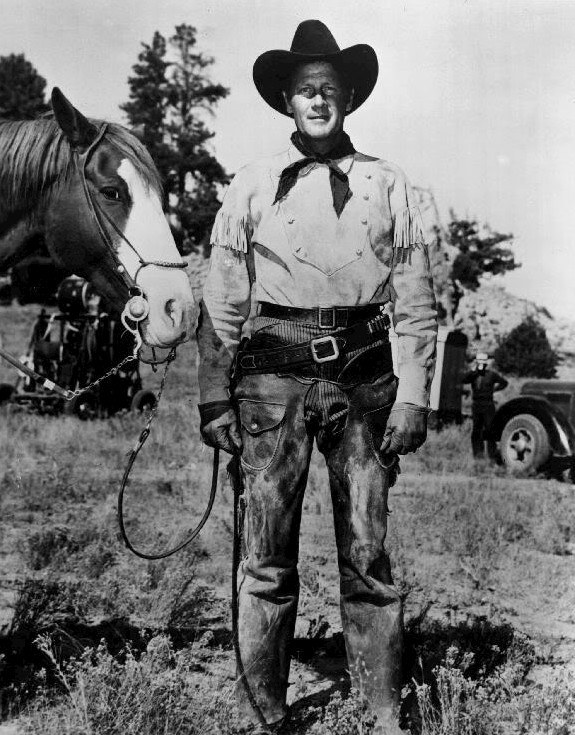
- NBC's publicity photo of McCrea as Jace Pearson shows him in his costume from the 1950 film The Outriders. source
- McCrea was a real horseman. He raised horses and ran a 3,000-acre ranch in Ventura County. source
- Joel McCrea has two stars on the Hollywood Walk of Fame, one for movies and one for radio. source
- Stacy Keach Sr.'s son, actor Stacy Keach, has said his father created, produced and directed the series for NBC Radio. source
- Producer Stacy Keach Sr. was an actor too. TV fans may know him as Carlson, the CONTROL lab inventor on Get Smart. source
- The real Rangers trace their roots to 1823, when Stephen F. Austin organized men to protect the colonists.
- In 1935 Texas made the Rangers a division of its new Department of Public Safety, partly to free them from a governor's personal control. source
- Gonzaullas's experience on the Texarkana case later became the basis for the 1976 film The Town That Dreaded Sundown. source
- Dell Comics put the show in comic books from 1952 to 1959, 22 issues in all, with McCrea on the first ten covers.
- The show even inspired a Belgian comic: Willy Vandersteen's Suske en Wiske album "De Texasrakkers." source
- A TV version ran on CBS from 1955 with Willard Parker as Jace. His partner, Ranger Clay Morgan, had been an occasional character on radio. source
Where the recordings come from
The Tales of the Texas Rangers recordings here come from the Old Time Radio Researchers' Tales of the Texas Rangers set (91 recordings), hosted by the Internet Archive. Our thanks to the Old Time Radio Researchers, the volunteers who found, dated and assembled the set, and to the Archive and the collectors whose uploads it rests on. The sound is our remaster of those files (rumble, hiss and hum cleaned out, levelled to steady broadcast loudness); the recordings themselves are theirs. About our sources.
Every Tales of the Texas Rangers episode: the full list, with air dates and stories
More to listen to
- Gunsmoke
- Have Gun, Will Travel
- Frontier Gentleman
- The Six Shooter
- Fort Laramie
- Christmas on old-time radio
Tales of the Texas Rangers cast
Supporting and character actors heard in our episodes of Tales of the Texas Rangers, each with the shows and episodes they are in. The supporting cast of old-time radio: every actor
- Tony Barrett (76 episodes)
- Byron Kane (21 episodes)
- Herb Ellis (20 episodes)
- Parley Baer (14 episodes)
- Virginia Gregg (12 episodes)
- Ken Christy (9 episodes)
- Barney Phillips (8 episodes)
- Lou Krugman (8 episodes)
- Paul Frees (8 episodes)
- Sam Edwards (8 episodes)
- Jeanette Nolan (7 episodes)
- Betty Lou Gerson (6 episodes)
- Peggy Webber (6 episodes)
- Ed Begley (5 episodes)
- Herb Vigran (5 episodes)
- Howard McNear (5 episodes)
- Lamont Johnson (5 episodes)
- Tom Tully (5 episodes)
- Roy Glenn (4 episodes)
- Dick Beals (3 episodes)
- Hal March (3 episodes)
- Herb Butterfield (3 episodes)
- Jeff Corey (3 episodes)
- Bob Sweeney (2 episodes)
Spotted a wrong date, title or name? Report a mistake · Missing a series? Request a show · Suggest a note
Questions
Who played Jace Pearson on Tales of the Texas Rangers?
Joel McCrea played Texas Ranger Jace Pearson on the NBC radio show from 1950 to 1952. On the later CBS TV version, which began in 1955, Willard Parker played Jace.
Were Tales of the Texas Rangers based on real cases?
Each episode was presented as a dramatized version of a real Texas Ranger case, with Ranger Captain Manuel T. "Lone Wolf" Gonzaullas as technical adviser. At least one script, "Paid in Full," was also used on Mr. District Attorney.
Where can I listen to Tales of the Texas Rangers for free?
On the Stupid Potato Tales of the Texas Rangers channel, which streams the original NBC radio episodes 24 hours a day, free and with no account. There is also a free podcast.
What was Jace Pearson's horse's name?
Charcoal. Now and then Jace called him "Charky."
Is Tales of the Texas Rangers free?
Yes. Tales of the Texas Rangers is free to listen to, live around the clock and as a podcast: no sign-up, no app and no subscription. Potato Plus is optional and never required.
Do I need an account or an app for Tales of the Texas Rangers?
No. It is an internet radio channel, live 24 hours a day: press Listen live, no sign-up and no app needed.
Are there ads on Tales of the Texas Rangers?
No modern ads, and we promise none until Valentine's Day 2027 (February 14). Nothing breaks into the show to sell you something you never asked for. Any commercials you hear are the original sponsor spots that aired with the broadcast.
Who makes Tales of the Texas Rangers?
Tales of the Texas Rangers is a Stupid Potato channel (https://stupidpotato.com/), made by Stupid Potato Studios and powered by MonsterCast. The other channels and the Stupid Potato cartoons are at https://stupidpotato.com/.