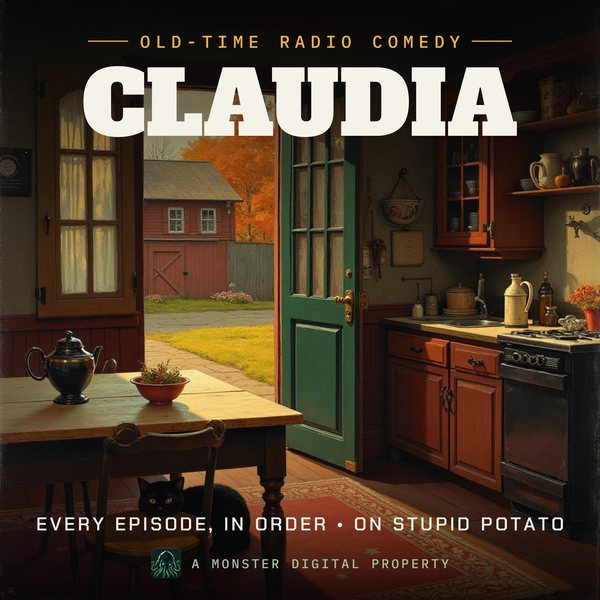
Old-time radio comedy from the golden age, whole shows back to back, around the clock: the great sitcoms, comedians and their casts, live before a studio audience. A Stupid Potato channel.
About Laugh Track
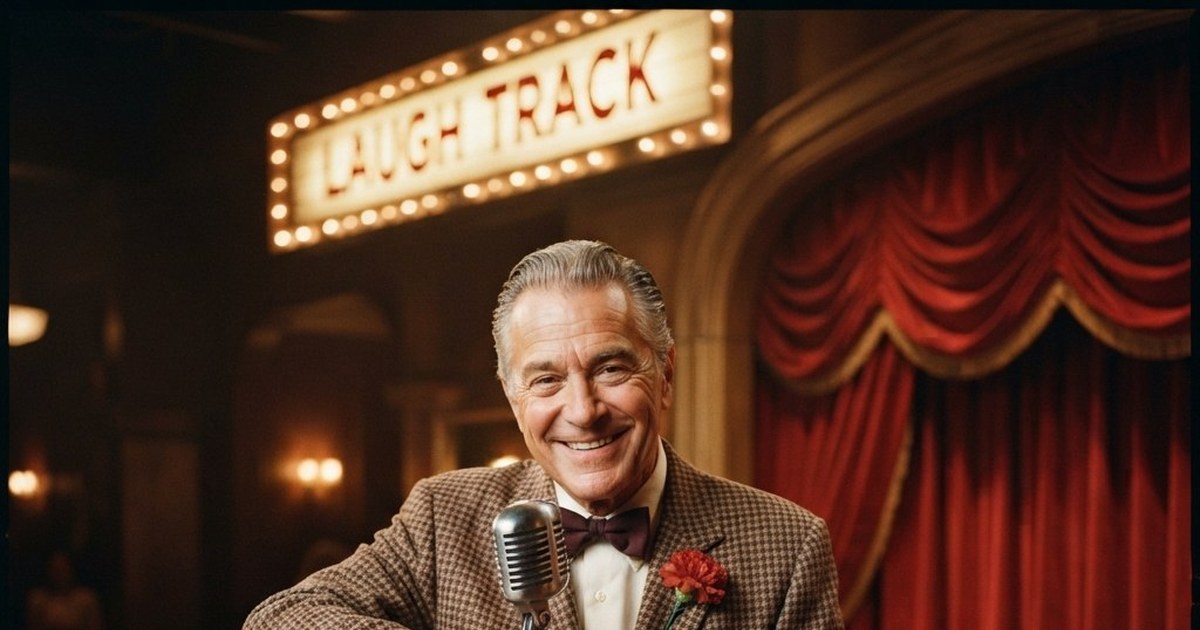
Laugh Track is a free old time radio comedy channel from Stupid Potato: complete comedy shows from radio's golden age, played back to back 24 hours a day. It plays The Jack Benny Program, Fibber McGee and Molly, The Great Gildersleeve, Burns and Allen, Our Miss Brooks, The Life of Riley, Duffy's Tavern, My Friend Irma, The Phil Harris-Alice Faye Show, Abbott and Costello, Fred Allen, Lum and Abner, Vic and Sade, The Bickersons and The Halls of Ivy. Listen free online with no account, or follow the Laugh Track podcast.
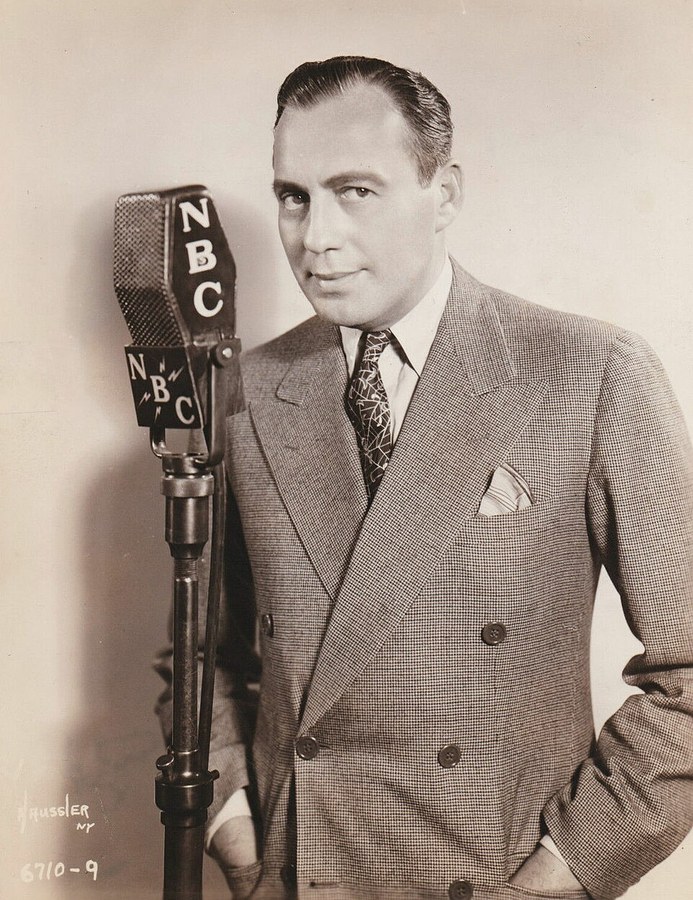
Before television, these shows were what America did on a weeknight. Jack Benny held the same Sunday 7 p.m. hour for 21 years on radio, built his act on being cheap and forever 39, and kept up a famous mock feud with Fred Allen. Fibber McGee and Molly made a running gag of an overstuffed hall closet, and its spin-off, The Great Gildersleeve, was one of broadcasting's first. The family sitcom, the workplace comedy and the catchphrase that television still leans on were worked out here, live before a studio audience.
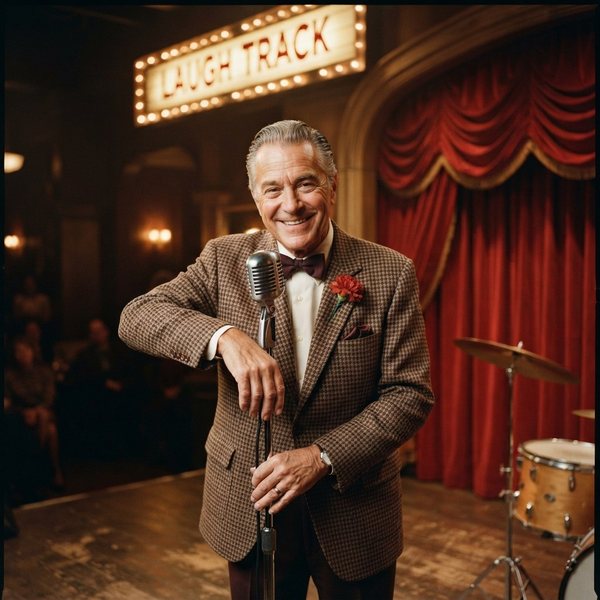
Your emcee is Buster Pratt, a vaudeville warm-up man who has been working the crowd since 1932: quick, corny, with a rimshot for every groaner and a soft spot for the old pros. Laugh Track suits commutes, chores and long drives, families looking for clean comedy, and anyone who knows these names from their grandparents and wants to hear why they were stars. The main series also have their own podcast pages here, from Jack Benny to Vic and Sade.
What you’ll hear
- The Jack Benny Program, with Mary Livingstone, Eddie "Rochester" Anderson, Phil Harris, Dennis Day and Mel Blanc
- Fibber McGee and Molly and its spin-off, The Great Gildersleeve
- Eve Arden as Our Miss Brooks, with Gale Gordon as principal Osgood Conklin
- William Bendix in The Life of Riley: "What a revoltin' development this is!"
- Gracie Allen's logic on Burns and Allen and Marie Wilson's on My Friend Irma
- Duffy's Tavern, "where the elite meet to eat," and Lum and Abner's Jot 'Em Down Store
- Abbott and Costello, Fred Allen, Vic and Sade, The Bickersons and Ronald Colman in The Halls of Ivy
Where to start
- Start with Jack Benny. His yearly Christmas shopping shows, like the December 1946 episode where he buys shoelaces for Don Wilson, are a perfect first taste.
- Most episodes run a half hour, so one fits a commute.
- Want one show only? The main series each have a podcast page where you can start from episode 1 or pick any episode.
The Jack Benny Program on the radio
NBC / CBS Radio, 1932-1955. With Jack Benny, Mary Livingstone, Eddie Anderson, Phil Harris, Dennis Day, Mel Blanc.
- Benny's own series began on May 2, 1932, on the NBC Blue Network as The Canada Dry Program, sponsored by Canada Dry ginger ale. That first version was mostly a music show. source
- After only a few broadcasts Benny hired Harry Conn as his writer. Canada Dry dropped the show in January 1933 after trying to replace Conn with Sid Silvers. source
- Benny moved on to The Chevrolet Program on NBC from March 1933 to April 1934. It ended because the head of General Motors wanted a musical program instead. source
- For most of its life the program was not announced as The Jack Benny Program at all. It took the sponsor's name: the Canada Dry, Chevrolet, General Tire, Jell-O, Grape-Nuts and Lucky Strike programs. source
Fibber McGee and Molly on the radio
NBC Radio, 1935-1959. With Harold Peary, Bill Thompson, Gale Gordon, Arthur Q. Bryan.
- Five days after the wedding, Jim Jordan got his draft notice. He went to France and ended up in a military touring group that entertained the troops after World War I. source
- Back home, Jim and Marian Jordan went into vaudeville. By 1923 they were stranded and broke in Lincoln, Illinois, with two small children, and their parents had to wire money to get them home. source
- The Jordans got into radio in 1924 on a $10 bet. Jim's brother bet him they couldn't do better than a singing act on the air, and by the end of the evening they had their first radio contract. source
- Their first radio job paid $10 a show, as The O'Henry Twins for Oh Henry! candy. source
The Burns and Allen Show on the radio
CBS / NBC Radio, 1932-1950. With Gracie Allen, Bea Benaderet, Meredith Willson, Mel Blanc.
- Burns later joked that all he had to do was say "Gracie, how's your brother?" and she talked for 38 years. source
- Burns explained Gracie's secret: she was the dizziest dame in the world, but she played every line as if it made perfect sense. source
- Burns wrote most of the act and played the straight man. In vaudeville, he admitted, they were a good act but never the headliners, usually billed fourth in an eight-act show. source
- The team's first radio broadcast was in London, on the BBC, in 1929. Back home, they failed an NBC audition in 1930. source
Our Miss Brooks on the radio
CBS Radio, 1948-1957. With Eve Arden, Gale Gordon, Jeff Chandler, Richard Crenna, Gloria McMillan, Robert Rockwell.
- Booth's audition, recorded April 9, 1948, survives. It had a completely different supporting cast and was written by Don Ettlinger, Norman Tokar and Edward Jurist. source
- Lucille Ball was reportedly the next candidate, but she was tied up with My Favorite Husband and never auditioned. source
- OTRR historian Ryan Ellett notes that Joan Blondell was also briefly considered before the part went to Arden.
- It was CBS chairman William Paley, a friend of Arden's, who persuaded her to audition. source
The Great Gildersleeve on the radio
NBC, 1941-1958. With Harold Peary, Willard Waterman, Lillian Randolph, Lurene Tuttle, Mary Lee Robb, Richard Crenna.
- On Fibber, Gildersleeve was the McGees' pompous next-door neighbor, and his exasperated "You're a harrrd man, McGee!" became a catchphrase. source
- A 1940 Fibber episode revealed Gildersleeve's middle name: Philharmonic. source
- Johnson's Wax, Fibber McGee's sponsor, paid for the Gildersleeve audition, recorded May 16, 1941. source
- The audition used the same script as the first broadcast three months later: Gildy leaves Wistful Vista to visit Summerfield and ends up staying. source
The Phil Harris-Alice Faye Show on the radio
NBC, 1948-1954. With Phil Harris, Alice Faye, Elliott Lewis, Gale Gordon.
- Harris and Faye married in May 1941, the second marriage for each. The marriage lasted 54 years, until Harris died in 1995. source
- Their marriage even inspired a 1941 episode of Jack Benny's show. source
- Faye walked out on 20th Century Fox in 1945 after studio chief Darryl Zanuck cut her scenes in Fallen Angel to build up Linda Darnell. source
- Every show closed with announcer Bill Forman saying Faye appeared courtesy of 20th Century Fox, a running joke, since she had walked out on the studio. source
Abbott and Costello on the radio
NBC, ABC, 1942-1949. With Bud Abbott, Joe Kirk, Elvia Allman, Connie Haines, Mel Blanc, George Fenneman.
- Kate Smith's manager, Ted Collins, spotted the team performing at Loew's State Theater and invited them onto the next day's broadcast. For their first 21 weeks they had to sign a new contract every week. source
- The pay on the Kate Smith show started at $300 for the first broadcast and $500 for the second. The team stayed on as regulars for two and a half years. source
- On the Kate Smith show Lou refused to read from a script because he felt it got in the way of his ad-libs. Bud held the script and kept the routine on track. source
- "Who's on First?" reached a national radio audience for the first time on March 24, 1938, on the Kate Smith program. source
Duffy's Tavern on the radio
CBS, NBC Blue, NBC, 1941-1951. With Ed Gardner, Shirley Booth, Charlie Cantor, Florence Halop, Alan Reed.
- Duffy, the owner, was never seen or heard on the radio show, in the 1945 movie or on the 1954 TV series. Archie dealt with him over the phone. source
- Archie, the manager, was always chasing get-rich-quick schemes and romance, and he mangled the language with malapropisms and mixed metaphors. source
- Ed Gardner was already playing Archie and talking about Duffy's Tavern on November 9, 1939, on NBC's Good News of 1940. source
- Archie was born by accident. Directing CBS's This Is New York, Gardner couldn't find an actor who sounded like a real New York mug, so he read the lines himself to demonstrate, and the control room told him to play the part. source
The Life of Riley on the radio
Blue Network/ABC, NBC, 1944-1951. With William Bendix, Paula Winslowe, Hans Conried, Alan Reed, Scotty Beckett, Mel Blanc.
- Losing the Flotsam Family didn't leave Groucho Marx off the air: he got his own series, Blue Ribbon Town, instead. source
- Brecher found his Riley after seeing Bendix play a Brooklyn taxicab company owner in Hal Roach's 1942 film The McGuerins from Brooklyn. source
- Brecher recalled that Bendix had made a few films but "was not a name." He rewrote the Flotsam script around a Brooklyn family, made it more down-to-earth, and gave it a new title: The Life of Riley. source
- Brecher was the radio show's creator, producer and head writer. source
The Fred Allen Show on the radio
CBS / NBC, 1932-1949. With Fred Allen, Portland Hoffa, Kenny Delmar, Minerva Pious, Alan Reed, Jimmy Wallington.
- In vaudeville Allen billed himself as the world's worst juggler, and his act gradually became more comedy monologue than juggling. source
- Radio historian John Dunning called Allen perhaps radio's most admired comedian, and also its most often censored. source
- Allen's fans included President Franklin Roosevelt, James Thurber, William Faulkner and John Steinbeck, and novelist Herman Wouk got his start writing for him. source
- Allen met Portland Hoffa while she was dancing in The Passing Show in 1922, and they married in 1927. source
Vic and Sade on the radio
NBC / CBS / Mutual, 1932-1946. With Bernardine Flynn, Bill Idelson.
- Vic and Sade began on NBC's Blue network and was broadcast from Chicago. source
- At the height of its popularity the show aired on all three major networks, sometimes as many as six times in a single day. source
- In 1943 Time magazine counted seven million devoted listeners. source
- With an audience of seven million, Vic and Sade was voted the top daytime radio series of 1942. source
My Friend Irma on the radio
CBS Radio, 1947-1954. With Marie Wilson, Cathy Lewis, Hans Conried, Alan Reed, Leif Erickson.
- Cy Howard was born Seymour Horowitz in Milwaukee in 1915 and later won an Emmy for writing The Smothers Brothers Comedy Hour. source
- Irma was a CBS in-house creation, part of a new network push to build its own shows and sell them to sponsors rather than airing programs packaged by ad agencies.
- Cy Howard believed casting would make or break the show, and he auditioned actresses for both leads without finding anyone until Cathy Lewis came in to read for Jane. source
- Cathy Lewis was one of radio's busiest actresses, and her impatient first line at the audition, demanding just five minutes, told Howard he had found his Jane. source
The Bickersons on the radio
NBC Radio / CBS Radio, 1946-1951. With Don Ameche, Frances Langford, Danny Thomas, Marvin Miller, Lew Parker, Carmen Dragon.
- Rapp was born in England in 1907 and came to the United States as a teenager. source
- Rapp began in vaudeville as a novelty dancer before he turned to writing gags for comedians. source
- John and Blanche Bickerson first went on the air in 1946 as a 15-minute sketch inside an NBC half-hour called Drene Time. source
- Drene Time was a variety show sponsored by Drene Shampoo, co-hosted by Don Ameche and singer-actress Frances Langford. source
Lum and Abner on the radio
NBC, Mutual, CBS, ABC, 1931-1954. With Chester Lauck, Norris Goff, Lurene Tuttle.
- Lauck said he picked "Lum" because it sounded backwoodsy and he had never known anyone by that name; Goff picked "Abner" as a good solid country name. source
- Lauck and Goff had first worked as blackface comedians. Because KTHS already had so many Amos 'n' Andy imitators, they switched to voices of the old men they knew in the Arkansas hills. source
- Lauck and Goff were only in their late twenties when they started playing the two old codgers. source
- At their NBC audition in Chicago, Lauck and Goff were offered $150 a week and held out for $350, a big gamble for two men from a town of about 4,000. source
The Halls of Ivy on the radio
NBC Radio, 1950-1952. With Ronald Colman, Willard Waterman, Gale Gordon.
- Quinn also created the Throckmorton P. Gildersleeve character on Fibber McGee and Molly. source
- Quinn started out as a cartoonist and found that magazines threw away his drawings but kept his captions, so he became a writer. source
- Quinn never went to college himself. He relied on his wife Edythe, whom he called his authority on college life. source
- Quinn said he chose a college setting because he wanted an excuse for a literate kind of comedy. source
Every Laugh Track episode: the full list, with air dates and stories
Spotted a wrong date, title or name? Report a mistake · Missing a series? Request a show · Suggest a note
Questions
Where can I listen to old Jack Benny radio shows for free?
Laugh Track plays complete Jack Benny Program episodes on a free 24/7 stream at stupidpotato.com, alongside other classic radio comedies, and The Jack Benny Program also has its own podcast page there.
What are the funniest old-time radio comedy shows?
The perennial favorites are The Jack Benny Program, Fibber McGee and Molly, Burns and Allen, The Great Gildersleeve, Our Miss Brooks, The Life of Riley and Duffy's Tavern. Laugh Track plays all of them.
Was Who's on First a radio routine?
Yes. Abbott and Costello first performed "Who's on First?" for a national radio audience on The Kate Smith Hour on March 24, 1938, and an October 1938 broadcast of it is in the Library of Congress National Recording Registry. Laugh Track plays Abbott and Costello's own radio shows.
What was the Jack Benny and Fred Allen feud?
A mock rivalry that began in late 1936 and ran for years on both men's shows, with insults traded on the air. Off the air, Benny and Allen were good friends.
Is Laugh Track free?
Yes. Laugh Track is free, live around the clock: no sign-up, no app and no subscription. Potato Plus is optional and never required.
More answers in Help ›
 Stupid Potato
 Join Potato Plus
 Snack Eater
 Gary's Bathroom Blaster
 Dungeon Master Gary
 Scrap Brawl