 Stupid Potato
 Join Potato Plus
Every channel · one stream
All Mixed Up
with Spud
No sign-up · one tap. It plays right here, around the clock.
Try Potato Plus free for 7 days: any episode, any time.
Sleep
Every Stupid Potato channel at once, shuffled around the clock: westerns and private eyes, old-time comedy, spooky songs, vintage TV and commercials, Saturday-morning cartoons and holiday cheer.
Stupid Potato streams 73 free live radio channels, 24 hours a day, and has 28,000+ complete episodes in its library. No sign-up, no app.
Play a free game while you listen
All 28 free games Snack Eater
 Gary's Bathroom Blaster
 Dungeon Master Gary
 Scrap Brawl
No download. Each game opens in a new tab, so the stream keeps playing.
Live · All Mixed UpTap play to listen
Sleep
Behind the show
Gunsmoke
Did you know?Gunsmoke premiered on CBS Radio on April 26, 1952, with the episode "Billy the Kid." Its final broadcast aired June 18, 1961.
SourceGunsmoke
- Gunsmoke premiered on CBS Radio on April 26, 1952, with the episode "Billy the Kid." Its final broadcast aired June 18, 1961. source
- Over nine seasons the radio series aired 480 episodes, a count that includes shows built from re-used or adapted scripts. source
Have Gun, Will Travel
- Have Gun, Will Travel came to CBS Radio on November 23, 1958, more than a year after Richard Boone's TV version had made it a hit. source
- The radio run lasted two years and 106 episodes, signing off on November 27, 1960. source
Frontier Gentleman
- Frontier Gentleman ran on CBS Radio from February 2 to November 16, 1958, a single season in the last years of network radio drama. source
- The hero is J. B. Kendall, an Englishman reporting on the American West for The Times of London, who carries a gun as well as a notebook. source
Tales of the Texas Rangers
- Tales of the Texas Rangers premiered on NBC Radio on July 8, 1950, and stayed on the air until September 14, 1952.
- Hollywood film star Joel McCrea played Texas Ranger Jace Pearson, a lawman who cracked cases with the newest scientific crime-detection methods. source
The Six Shooter
- The Six Shooter premiered on NBC on Sunday, September 20, 1953, with James Stewart as the drifting cowboy Britt Ponset. source
- The show lasted a single season: 39 episodes, the last of them broadcast on June 24, 1954. source
Fort Laramie
- Fort Laramie premiered on CBS Radio on Sunday, January 22, 1956, and ran until October 28, 1956, in a Sunday slot at 5:30 p.m. Eastern. source
- The very first episode, "Playing Indian," has Captain Quince setting a trap for horse thieves and killers who are trying to make the cavalry blame the Arapaho. source
Watch and listen
Coming up (times are about right)
Just played
Every Stupid Potato channel at once, shuffled around the clock: westerns and private eyes, old-time comedy, spooky songs, vintage TV and commercials, Saturday-morning cartoons and holiday cheer.
About All Mixed Up
All Mixed Up is Stupid Potato's everything channel: every Stupid Potato station shuffled into one free 24/7 stream. Old time radio westerns and private eyes, classic radio comedy, suspense and science fiction, spooky songs, vintage TV commercials and theme songs, Saturday-morning cartoons and Christmas cheer all take turns, so the next thing you hear could be Gunsmoke, a Cap'n Crunch ad or Bing Crosby. Listen free online, with no account and no app.
Think of it as channel surfing across a century of American broadcasting. A complete episode of Yours Truly, Johnny Dollar or The Jack Benny Program might be followed by a 1950s Brylcreem jingle, the "Monster Mash" or a Space Patrol adventure. All Mixed Up draws only on what the other Stupid Potato channels already play, so everything here was picked for one of them, and it takes in new channels automatically as they launch.
All Mixed Up is the easiest way to find the Stupid Potato channel you like best. When something grabs you, its home channel has more of it: Dry Gulch for westerns, Gumshoe for detectives, Laugh Track for comedy, The Midnight Exchange for suspense, Signal From Tomorrow for science fiction, The Night Shift for Halloween, Don't Touch That Dial for retro TV, Saturday Mornings for cartoons and Santa's North Pole Radio for Christmas.
What you’ll hear
- Complete old-time radio episodes: Gunsmoke, Johnny Dollar, Jack Benny, Suspense, X Minus One and more
- Vintage TV commercials, jingles and theme songs
- Halloween novelty records and horror movie music
- Saturday-morning cartoon themes and cereal and toy ads
- Christmas songs, novelty records and holiday radio specials
Where to start
- Press Listen live and let the shuffle surprise you.
- Hear something you like? Its home channel has more, and the episode guide on this page covers the radio series.
Gunsmoke on the radio
CBS Radio, 1952-1961. With William Conrad, Parley Baer, Howard McNear, Sam Edwards, Lawrence Dobkin, Virginia Gregg.
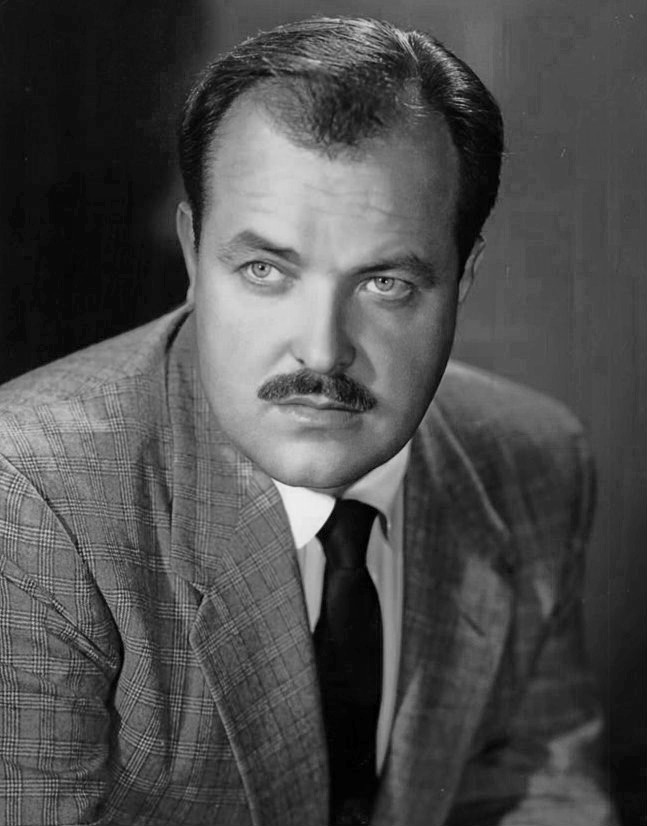
- The radio regulars: William Conrad as Marshal Matt Dillon, Howard McNear as Doc Charles Adams, Georgia Ellis as Kitty Russell, and Parley Baer as Chester Wesley Proudfoot. source
- The idea started with CBS chairman William S. Paley, a fan of the Philip Marlowe radio show, who wanted "a Philip Marlowe of the Old West." source
- In 1949 CBS recorded two audition shows called "Mark Dillon Goes to Gouge Eye": one starring Rye Billsbury (Michael Rye), the other Howard Culver. Neither ever aired. source
- Howard Culver, star of the second audition, couldn't go on with the show: his contract as radio's Straight Arrow barred him from doing another Western. source
Have Gun, Will Travel on the radio
CBS Radio, 1958-1960. With John Dehner, Ben Wright, Virginia Gregg.
- It's a rare case of a radio series that started out on television. Usually it went the other way.
- Nobody is sure who thought up the radio version. Ben Wright believed it was producer-director Norman Macdonnell's idea. source
- Wright's theory: Macdonnell had lost control of Gunsmoke when it went to TV, and a radio Have Gun let him show the TV people what he could do with their show. source
- Actor Larry Dobkin had another guess. Gunsmoke was still pulling in radio listeners, so CBS may simply have wanted another Western. source
Frontier Gentleman on the radio
CBS Radio, 1958. With John Dehner, Virginia Gregg, Joseph Kearns, Stacy Harris.
- Each show opened with a trumpet theme and an announcer promising "an Englishman's account of life and death in the West." source
- Antony Ellis created Frontier Gentleman, and he wrote, produced and directed it too. source
- The series is set in the years after the Civil War. Its stories mix made-up drifters and outlaws with real names from history. source
- Kendall crossed paths with real Western figures, including Jesse James, Calamity Jane and Wild Bill Hickok. source
Tales of the Texas Rangers on the radio
NBC Radio, 1950-1952. With Joel McCrea, Tony Barrett, Virginia Gregg, Lurene Tuttle.
- Jace rode a horse named Charcoal, and now and then he called him "Charky." source
- Every episode was presented as a dramatized version of a real Texas Ranger case. source
- The cases ran from the 1920s up to the early 1950s, a span chosen to show the kind of variety one Ranger might meet over a whole career. source
- Despite the cowboy hats, this was really a police procedural, built much like Jack Webb's Dragnet but with a Western flavor. source
The Six Shooter on the radio
NBC Radio, 1953-1954. With James Stewart, Virginia Gregg, William Conrad, Howard McNear, Parley Baer.
- This was Jimmy Stewart's only starring role in a regular radio series. Before it, he had been heard as a guest on anthology and variety shows. source
- Writer Frank Burt created Britt Ponset, and he wrote every episode of the series except one. source
- The one script Frank Burt didn't write was "Red Lawson's Revenge" (October 25, 1953). It came from Les Crutchfield, who also wrote for Gunsmoke, Fort Laramie and Yours Truly, Johnny Dollar. source
- Jack Johnstone produced and directed the series, which NBC made in association with Revue Productions. source
Fort Laramie on the radio
CBS Radio, 1956. With Raymond Burr, Old Bedlam, General William T. Sherman.
- Each show opened by promising "specially transcribed tales of the dark and tragic ground of the wild frontier."
- The announcer went on to call it the saga of fighting men "who rode the rim of empire," and the story of Lee Quince, Captain of Cavalry.
- Raymond Burr starred as Captain Lee Quince, a cavalry officer at the old frontier post of Fort Laramie. source
- Reviewers point out that Fort Laramie was Raymond Burr's only starring role on radio. He usually played villains. source
Yours Truly, Johnny Dollar on the radio
CBS Radio, 1949-1962. With Bob Bailey, Edmond O'Brien, John Lund, Charles Russell, Dick Powell, Mandel Kramer.
- Johnny was introduced as "the man with the action-packed expense account, America's fabulous freelance insurance investigator."
- The show's title comes from Johnny's sign-off: he totaled his expense account and signed it "End of report... Yours truly, Johnny Dollar."
- Each case was told in flashback, with Johnny reading line items from his expense account. Those items doubled as the show's scene transitions. source
- No expense was too small to list, as in: "Item nine, 10 cents. Aspirin. I needed them." source
Let George Do It on the radio
Mutual-Don Lee, 1946-1954. With Bob Bailey, Virginia Gregg, Frances Robinson, Joseph Kearns, Olan Soule, Ken Christy.
- Owen and Pauline Vinson produced the series, and at first they directed it as well. source
- Bob Bailey starred as George Valentine for almost the whole run. Olan Soule took over the voice of George in 1954. source
- George Valentine is an ex-G.I. who sets out to make money doing the jobs other people can't do for themselves, or don't have the nerve to. source
- Every client found George through a personal ad in the paper: "Danger's my stock in trade. If the job's too tough for you to handle, you've got a job for me." source
Boston Blackie on the radio
NBC (1944); Ziv syndication on Mutual and ABC (1945-1950), 1944-1950. With Chester Morris, Richard Lane, Jan Miner, Lesley Woods, Harlow Wilcox.
- The first four Blackie stories ran in The American Magazine in 1914, under the pen name "No. 6606." source
- Blackie was softened for film and radio into a reformed crook who solves crimes, "enemy to those who make him an enemy, friend to those who have no friend." source
- Columbia Pictures revived Blackie in 1941 with Meet Boston Blackie, starring Chester Morris. Morris made 14 Blackie films through 1949. source
- Blackie's full name is Horatio Black. source
Broadway Is My Beat on the radio
CBS, 1949-1954. With Larry Thor, Anthony Ross, Jack Kruschen.
- The show opened with the song "I'll Take Manhattan" as its theme. source
- "I'll Take Manhattan" became the theme when Elliott Lewis took over as producer and director in November 1949. source
- Clover was the head of a made-up "Broadway Special Detail" in Midtown Manhattan's detective division. source
- Stories usually ended on a quiet, melancholy note. Instead of wrapping up the case, Clover would muse about the city, ending with "Broadway... my beat!" source
Nick Carter, Master Detective on the radio
Mutual, 1943-1955. With Lon Clark, Charlotte Manson, Leon Janney.
- The show first went out under the name The Return of Nick Carter, a nod to the detective's long career in print, before it settled on Nick Carter, Master Detective. source
- Clark played Nick Carter from 1943 until the series ended in 1955, a run of twelve years on Mutual.
- Jerry Haendiges' log counts 722 episodes from 1943 to 1955. Only 97 of them are in his collection, and the other 625 are listed as missing. source
- The last broadcast, on September 25, 1955, was "The Case of the Counterfeit Passports." source
Richard Diamond, Private Detective on the radio
NBC, ABC, CBS, 1949-1953. With Dick Powell, Virginia Gregg, Ed Begley, Arthur Q. Bryan, Alan Reed.
- Diamond took over the slot from Horace Heidt's Original Youth Opportunity Program. source
- Blake Edwards created the series, and many episodes were written or directed by him. source
- Edwards later became a top film director, making Breakfast at Tiffany's, Days of Wine and Roses and the Pink Panther films. source
- Edwards's hard-boiled Diamond scripts became NBC's answer to Sam Spade and Philip Marlowe, with Edwards's own brand of humor. source
The Adventures of Philip Marlowe on the radio
NBC (1947), CBS (1948-1951), 1947-1951. With Gerald Mohr, Van Heflin, Jeff Corey, William Conrad.
- The opening episode adapted Chandler's 1938 short story "Red Wind," and Marlowe recited the story's opening lines over the music. source
- The NBC summer run lasted thirteen episodes and ended on September 9, 1947. source
- Milton Geiger wrote the first NBC script. Chandler did not like it, and in a letter to Erle Stanley Gardner he called it "thoroughly flat." source
- Lyn Murray composed the music for the NBC run. A theme from the first two episodes turned up again in his 1954 score for Alfred Hitchcock's To Catch a Thief. source
The Adventures of Sam Spade on the radio
ABC, CBS and NBC Radio, 1946-1951. With Howard Duff, Lurene Tuttle, Stephen Dunne, Jerry Hausner.
- An audition recording called "Sam Spade and the Walls of Jericho" was made on May 1, 1946. source
- Sam Spade premiered on ABC on July 12, 1946, as a summer replacement for the Woody Herman show. The first story was "The Guiana Sovereign." source
- The show caught on fast. It moved to CBS on Sunday nights starting September 29, 1946, with "The Blood Money Caper." source
- Howard Duff played Spade, and Lurene Tuttle played his devoted secretary, Effie Perrine. source
Barrie Craig, Confidential Investigator on the radio
NBC Radio, 1951-1955. With William Gargan, Elspeth Eric, Arnold Moss, Parley Baer, Howard McNear, Betty Lou Gerson.
- The first episode, on October 3, 1951, was "The Simultaneous Man." source
- Craig worked alone out of an office on Madison Avenue in Manhattan. source
- The Digital Deli puts Craig's office on the third floor of the Mercantile Building on Madison Avenue. source
- Craig was more easygoing than rivals like Sam Spade and Philip Marlowe, a laid-back eye in a field full of hard-boiled ones. source
Box 13 on the radio
Syndicated (Mayfair Transcriptions), 1947-1949. With Alan Ladd, Edmund MacDonald, Betty Lou Gerson, Frank Lovejoy.
- Nearly every episode starts with a letter in Box 13, and the letter writers ranged from a racketeer's victim to a psychotic killer looking for fun.
- Ladd didn't just star. His own company, Mayfair Productions, created the show, and his partner in it was Bernie Joslin, who had run the Mayfair Restaurants chain. source
- Ladd's Mayfair Transcription Company labelled the discs "Box Thirteen," but the ads, flyers, listings and reviews of the day all called it "Box 13." source
- Box 13 was syndicated, not run by a network. Stations bought the transcribed discs and aired them on their own nights, so broadcast dates differ from city to city. source
Pat Novak, for Hire on the radio
ABC (West Coast regional 1946-47, network 1949), 1946-1949. With Jack Webb, Raymond Burr, Tudor Owen, William Conrad, George Fenneman, Virginia Gregg.
- The first version premiered on August 22, 1946, sponsored by Gallenkamp's shoes. source
- The 1946-47 run was heard only on ABC's West Coast network, so most of the country never heard it. source
- Webb landed in San Francisco after his wartime discharge. A shortage of announcers there got him his own shows on ABC's KGO. source
- Before Novak, Webb had a one-man KGO show, One Out of Seven, where he acted out a news story from the past week and played every voice himself. source
Candy Matson, YUkon 2-8209 on the radio
NBC (West Coast), 1949-1951. With Radio City, Dudley Manlove, Helen Kleeb, Dorothy Warenskjold, Tudor Owen.
- The title is her phone number. Every show starts with a ringing telephone and Candy answering, "Candy Matson, YUkon 2-8209." source
- After she picks up the phone, the organ goes into the theme song, simply called "Candy." source
- Eloise Rowan was the show's organist and its only musician. Masters didn't use the NBC orchestra. source
- Natalie Masters starred as Candy. Her husband, Monty Masters, created the show, wrote it, produced it and directed it. source
The Jack Benny Program on the radio
NBC / CBS Radio, 1932-1955. With Jack Benny, Mary Livingstone, Eddie Anderson, Phil Harris, Dennis Day, Mel Blanc.
- Benny's own series began on May 2, 1932, on the NBC Blue Network as The Canada Dry Program, sponsored by Canada Dry ginger ale. That first version was mostly a music show. source
- After only a few broadcasts Benny hired Harry Conn as his writer. Canada Dry dropped the show in January 1933 after trying to replace Conn with Sid Silvers. source
- Benny moved on to The Chevrolet Program on NBC from March 1933 to April 1934. It ended because the head of General Motors wanted a musical program instead. source
- For most of its life the program was not announced as The Jack Benny Program at all. It took the sponsor's name: the Canada Dry, Chevrolet, General Tire, Jell-O, Grape-Nuts and Lucky Strike programs. source
Fibber McGee and Molly on the radio
NBC Radio, 1935-1959. With Harold Peary, Bill Thompson, Gale Gordon, Arthur Q. Bryan.
- Five days after the wedding, Jim Jordan got his draft notice. He went to France and ended up in a military touring group that entertained the troops after World War I. source
- Back home, Jim and Marian Jordan went into vaudeville. By 1923 they were stranded and broke in Lincoln, Illinois, with two small children, and their parents had to wire money to get them home. source
- The Jordans got into radio in 1924 on a $10 bet. Jim's brother bet him they couldn't do better than a singing act on the air, and by the end of the evening they had their first radio contract. source
- Their first radio job paid $10 a show, as The O'Henry Twins for Oh Henry! candy. source
The Burns and Allen Show on the radio
CBS / NBC Radio, 1932-1950. With Gracie Allen, Bea Benaderet, Meredith Willson, Mel Blanc.
- Burns later joked that all he had to do was say "Gracie, how's your brother?" and she talked for 38 years. source
- Burns explained Gracie's secret: she was the dizziest dame in the world, but she played every line as if it made perfect sense. source
- Burns wrote most of the act and played the straight man. In vaudeville, he admitted, they were a good act but never the headliners, usually billed fourth in an eight-act show. source
- The team's first radio broadcast was in London, on the BBC, in 1929. Back home, they failed an NBC audition in 1930. source
Our Miss Brooks on the radio
CBS Radio, 1948-1957. With Eve Arden, Gale Gordon, Jeff Chandler, Richard Crenna, Gloria McMillan, Robert Rockwell.
- Booth's audition, recorded April 9, 1948, survives. It had a completely different supporting cast and was written by Don Ettlinger, Norman Tokar and Edward Jurist. source
- Lucille Ball was reportedly the next candidate, but she was tied up with My Favorite Husband and never auditioned. source
- OTRR historian Ryan Ellett notes that Joan Blondell was also briefly considered before the part went to Arden.
- It was CBS chairman William Paley, a friend of Arden's, who persuaded her to audition. source
The Great Gildersleeve on the radio
NBC, 1941-1958. With Harold Peary, Willard Waterman, Lillian Randolph, Lurene Tuttle, Mary Lee Robb, Richard Crenna.
- On Fibber, Gildersleeve was the McGees' pompous next-door neighbor, and his exasperated "You're a harrrd man, McGee!" became a catchphrase. source
- A 1940 Fibber episode revealed Gildersleeve's middle name: Philharmonic. source
- Johnson's Wax, Fibber McGee's sponsor, paid for the Gildersleeve audition, recorded May 16, 1941. source
- The audition used the same script as the first broadcast three months later: Gildy leaves Wistful Vista to visit Summerfield and ends up staying. source
The Phil Harris-Alice Faye Show on the radio
NBC, 1948-1954. With Phil Harris, Alice Faye, Elliott Lewis, Gale Gordon.
- Harris and Faye married in May 1941, the second marriage for each. The marriage lasted 54 years, until Harris died in 1995. source
- Their marriage even inspired a 1941 episode of Jack Benny's show. source
- Faye walked out on 20th Century Fox in 1945 after studio chief Darryl Zanuck cut her scenes in Fallen Angel to build up Linda Darnell. source
- Every show closed with announcer Bill Forman saying Faye appeared courtesy of 20th Century Fox, a running joke, since she had walked out on the studio. source
Abbott and Costello on the radio
NBC, ABC, 1942-1949. With Bud Abbott, Joe Kirk, Elvia Allman, Connie Haines, Mel Blanc, George Fenneman.
- Kate Smith's manager, Ted Collins, spotted the team performing at Loew's State Theater and invited them onto the next day's broadcast. For their first 21 weeks they had to sign a new contract every week. source
- The pay on the Kate Smith show started at $300 for the first broadcast and $500 for the second. The team stayed on as regulars for two and a half years. source
- On the Kate Smith show Lou refused to read from a script because he felt it got in the way of his ad-libs. Bud held the script and kept the routine on track. source
- "Who's on First?" reached a national radio audience for the first time on March 24, 1938, on the Kate Smith program. source
Duffy's Tavern on the radio
CBS, NBC Blue, NBC, 1941-1951. With Ed Gardner, Shirley Booth, Charlie Cantor, Florence Halop, Alan Reed.
- Duffy, the owner, was never seen or heard on the radio show, in the 1945 movie or on the 1954 TV series. Archie dealt with him over the phone. source
- Archie, the manager, was always chasing get-rich-quick schemes and romance, and he mangled the language with malapropisms and mixed metaphors. source
- Ed Gardner was already playing Archie and talking about Duffy's Tavern on November 9, 1939, on NBC's Good News of 1940. source
- Archie was born by accident. Directing CBS's This Is New York, Gardner couldn't find an actor who sounded like a real New York mug, so he read the lines himself to demonstrate, and the control room told him to play the part. source
The Life of Riley on the radio
Blue Network/ABC, NBC, 1944-1951. With William Bendix, Paula Winslowe, Hans Conried, Alan Reed, Scotty Beckett, Mel Blanc.
- Losing the Flotsam Family didn't leave Groucho Marx off the air: he got his own series, Blue Ribbon Town, instead. source
- Brecher found his Riley after seeing Bendix play a Brooklyn taxicab company owner in Hal Roach's 1942 film The McGuerins from Brooklyn. source
- Brecher recalled that Bendix had made a few films but "was not a name." He rewrote the Flotsam script around a Brooklyn family, made it more down-to-earth, and gave it a new title: The Life of Riley. source
- Brecher was the radio show's creator, producer and head writer. source
The Fred Allen Show on the radio
CBS / NBC, 1932-1949. With Fred Allen, Portland Hoffa, Kenny Delmar, Minerva Pious, Alan Reed, Jimmy Wallington.
- In vaudeville Allen billed himself as the world's worst juggler, and his act gradually became more comedy monologue than juggling. source
- Radio historian John Dunning called Allen perhaps radio's most admired comedian, and also its most often censored. source
- Allen's fans included President Franklin Roosevelt, James Thurber, William Faulkner and John Steinbeck, and novelist Herman Wouk got his start writing for him. source
- Allen met Portland Hoffa while she was dancing in The Passing Show in 1922, and they married in 1927. source
Vic and Sade on the radio
NBC / CBS / Mutual, 1932-1946. With Bernardine Flynn, Bill Idelson.
- Vic and Sade began on NBC's Blue network and was broadcast from Chicago. source
- At the height of its popularity the show aired on all three major networks, sometimes as many as six times in a single day. source
- In 1943 Time magazine counted seven million devoted listeners. source
- With an audience of seven million, Vic and Sade was voted the top daytime radio series of 1942. source
My Friend Irma on the radio
CBS Radio, 1947-1954. With Marie Wilson, Cathy Lewis, Hans Conried, Alan Reed, Leif Erickson.
- Cy Howard was born Seymour Horowitz in Milwaukee in 1915 and later won an Emmy for writing The Smothers Brothers Comedy Hour. source
- Irma was a CBS in-house creation, part of a new network push to build its own shows and sell them to sponsors rather than airing programs packaged by ad agencies.
- Cy Howard believed casting would make or break the show, and he auditioned actresses for both leads without finding anyone until Cathy Lewis came in to read for Jane. source
- Cathy Lewis was one of radio's busiest actresses, and her impatient first line at the audition, demanding just five minutes, told Howard he had found his Jane. source
The Bickersons on the radio
NBC Radio / CBS Radio, 1946-1951. With Don Ameche, Frances Langford, Danny Thomas, Marvin Miller, Lew Parker, Carmen Dragon.
- Rapp was born in England in 1907 and came to the United States as a teenager. source
- Rapp began in vaudeville as a novelty dancer before he turned to writing gags for comedians. source
- John and Blanche Bickerson first went on the air in 1946 as a 15-minute sketch inside an NBC half-hour called Drene Time. source
- Drene Time was a variety show sponsored by Drene Shampoo, co-hosted by Don Ameche and singer-actress Frances Langford. source
Lum and Abner on the radio
NBC, Mutual, CBS, ABC, 1931-1954. With Chester Lauck, Norris Goff, Lurene Tuttle.
- Lauck said he picked "Lum" because it sounded backwoodsy and he had never known anyone by that name; Goff picked "Abner" as a good solid country name. source
- Lauck and Goff had first worked as blackface comedians. Because KTHS already had so many Amos 'n' Andy imitators, they switched to voices of the old men they knew in the Arkansas hills. source
- Lauck and Goff were only in their late twenties when they started playing the two old codgers. source
- At their NBC audition in Chicago, Lauck and Goff were offered $150 a week and held out for $350, a big gamble for two men from a town of about 4,000. source
The Halls of Ivy on the radio
NBC Radio, 1950-1952. With Ronald Colman, Willard Waterman, Gale Gordon.
- Quinn also created the Throckmorton P. Gildersleeve character on Fibber McGee and Molly. source
- Quinn started out as a cartoonist and found that magazines threw away his drawings but kept his captions, so he became a writer. source
- Quinn never went to college himself. He relied on his wife Edythe, whom he called his authority on college life. source
- Quinn said he chose a college setting because he wanted an excuse for a literate kind of comedy. source
Every All Mixed Up episode: the full list, with air dates and stories
Spotted a wrong date, title or name? Report a mistake · Missing a series? Request a show · Suggest a note
Questions
Is there one station that plays all kinds of old-time radio?
Yes. All Mixed Up shuffles westerns, detective shows, comedy, suspense and science fiction from radio's golden age with vintage TV commercials and holiday music, free and live 24 hours a day at stupidpotato.com.
Does All Mixed Up have a podcast?
No, All Mixed Up is a live stream only. For podcasts, subscribe to the individual channels, such as Dry Gulch, Gumshoe or Laugh Track, or to our own shows like Boomer Mix and The Night Shift.
Can I listen to just one kind of show?
Yes. Each kind of show here has its own channel at stupidpotato.com: Dry Gulch (westerns), Gumshoe (private eyes), Laugh Track (comedy), The Midnight Exchange (suspense), Signal From Tomorrow (science fiction) and more.
Is All Mixed Up free?
Yes. All Mixed Up is free, live around the clock: no sign-up, no app and no subscription. Potato Plus is optional and never required.
Do I need an account or an app for All Mixed Up?
No. It is an internet radio channel, live 24 hours a day: press Listen live, no sign-up and no app needed.
Are there ads on All Mixed Up?
No modern ads, and we promise none until Valentine's Day 2027 (February 14). Nothing breaks into the show to sell you something you never asked for. Any commercials you hear are the original sponsor spots that aired with the broadcast.
Who makes All Mixed Up?
All Mixed Up is a Stupid Potato channel (https://stupidpotato.com/), made by Stupid Potato Studios and powered by MonsterCast. The other channels and the Stupid Potato cartoons are at https://stupidpotato.com/.